English
 Español
 tiếng việt
 русский
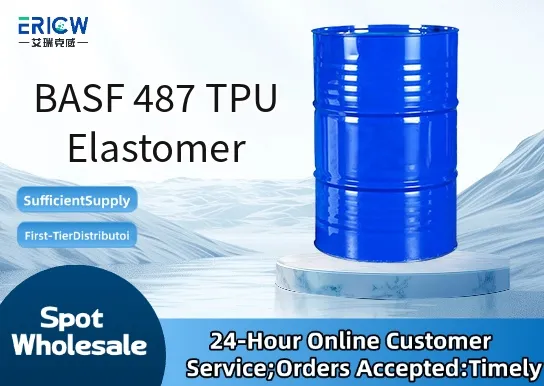
Excellent abrasion resistance for extended service life in demanding mechanical environments.
High elasticity and recovery performance, maintaining shape integrity after repeated deformation.
Good low-temperature flexibility down to –30 °C, enabling reliable performance in cold-condition applications.
Outstanding oil and grease resistance, suitable for use in lubricated or hydrocarbon-exposed settings.
Processable via standard thermoplastic methods including injection molding, extrusion, and blow molding.
Automotive interior trim components requiring soft-touch feel and durability.
Industrial hoses and bellows subject to flexing, pressure, and chemical exposure.
Consumer electronics protective casings and wearable device straps.
Footwear midsoles and outsoles where resilience and energy return are critical.
Medical tubing and non-implantable devices requiring biocompatibility (ISO 10993 tested).
| Chemical Type | Thermoplastic Polyurethane (TPU), polyester-based |
| Product Form | Pellets |
| Appearance | Opaque, off-white to light beige granules |
| Primary Applications | Extruded profiles, molded parts, flexible tubing, wear-resistant components |
| Key Features | Abrasion resistance, elasticity, low-temperature flexibility, oil resistance |
| Processing Methods | Injection molding, extrusion, blow molding |
| Compliance | RoHS compliant; meets FDA 21 CFR §177.1680 for indirect food contact |
| Storage Conditions | Store in dry, cool conditions (<25 °C); keep sealed to prevent moisture absorption |
Q1: What is the primary application area for BASF 487 TPU Elastomer?
A: BASF 487 is a thermoplastic polyurethane elastomer designed primarily for extrusion and injection molding applications requiring excellent melt stability, good abrasion resistance, and balanced mechanical properties—commonly used in technical profiles, soft-touch overmolding, and flexible industrial components.
Q2: Is BASF 487 suitable for processing on standard thermoplastic equipment?
A: Yes, BASF 487 is fully compatible with conventional thermoplastic processing equipment, including single-screw and twin-screw extruders as well as injection molding machines. It exhibits good thermal stability during processing and does not require specialized drying beyond standard TPU conditioning protocols.
Q3: How does BASF 487 compare to other TPU grades in terms of hardness and flexibility?
A: BASF 487 is formulated as a medium-hardness TPU elastomer, offering a practical balance between rigidity and elasticity. It provides higher tensile strength and better dimensional stability than softer TPU grades, while retaining greater flexibility and impact resilience compared to rigid thermoplastics like rigid PVC or certain polyesters.
Q4: Can BASF 487 be blended with other polymers?
A: BASF 487 demonstrates reasonable compatibility with certain engineering thermoplastics such as polypropylene and ABS in tailored compound formulations. However, successful blending requires careful evaluation of interfacial adhesion, thermal history, and end-use performance requirements—compatibilizers may be recommended depending on the matrix polymer and intended function.
Q5: Does BASF 487 contain plasticizers or halogenated additives?
A: No, BASF 487 is a non-plasticized, halogen-free TPU elastomer. Its formulation relies on intrinsic polymer architecture rather than migrating additives to achieve flexibility and processability, supporting suitability for applications where long-term stability and regulatory simplicity are valued.
Contact With Us:
E-mail: wangxingqiang@ericwchem.com
Have a Questions? Call Us:
Add:
Building A1, Jiete Industrial Park, Huangpu District, Guangzhou City, Guangdong Province, China