English
 Español
 tiếng việt
 русский
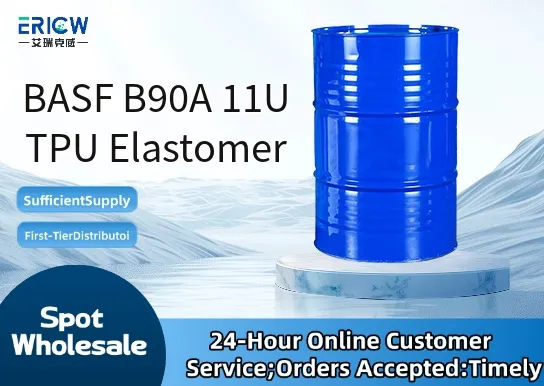
Excellent abrasion resistance for extended service life in demanding mechanical environments.
High tensile strength and elongation at break, enabling robust performance under dynamic stress.
Good low-temperature flexibility down to –30 °C, maintaining elasticity in cold-condition applications.
Outstanding processability via injection molding and extrusion, with consistent melt stability.
Hydrolysis-resistant formulation suitable for humid or wet operating conditions.
Automotive interior components including gear knobs, trim seals, and soft-touch overlays.
Industrial hoses and pneumatic tubing requiring oil and weather resistance.
Consumer electronics casings and protective sleeves demanding impact absorption and surface feel.
Footwear midsoles and outsoles where rebound resilience and wear durability are critical.
Medical device tubing and connectors compatible with ISO 10993-5 cytocompatibility requirements.
| Chemical Type | Aliphatic polyester-based thermoplastic polyurethane (TPU) |
| Product Form | Pellets |
| Appearance | Off-white to light beige granules |
| Primary Applications | Injection molding, extrusion, blow molding |
| Key Features | Abrasion resistance, hydrolysis stability, low-temperature flexibility |
| Processing Temperature Range | 180–220 °C (melt temperature) |
| Density (ISO 1183) | 1.18–1.20 g/cm³ |
| Melt Flow Index (ISO 1133, 210 °C/5 kg) | 10–14 g/10 min |
Q1: What is the primary processing method recommended for BASF B90A 11U?
A: BASF B90A 11U is specifically formulated for melt processing via extrusion and injection molding. Its optimized melt viscosity and thermal stability support consistent flow and minimal degradation during standard thermoplastic processing cycles.
Q2: Is B90A 11U suitable for applications requiring flexibility at low temperatures?
A: Yes — as a polyester-based TPU elastomer, B90A 11U delivers excellent low-temperature flexibility and resilience, maintaining mechanical performance down to approximately −30 °C in typical service conditions.
Q3: How does B90A 11U compare to polyether-based TPUs in terms of hydrolytic stability?
A: While polyether TPUs generally offer superior resistance to hydrolysis, B90A 11U — as a high-purity polyester TPU — incorporates stabilizers and refined polymer architecture to provide enhanced hydrolytic resistance relative to standard polyester TPUs, particularly under moderate humidity and temperature conditions.
Q4: Can B90A 11U be overmolded onto common engineering thermoplastics?
A: Yes — B90A 11U exhibits good interfacial adhesion when overmolded onto substrates such as polypropylene (PP), ABS, and polycarbonate (PC), provided appropriate mold temperature, surface preparation, and process parameter optimization are applied.
Contact With Us:
E-mail: wangxingqiang@ericwchem.com
Have a Questions? Call Us:
Add:
Building A1, Jiete Industrial Park, Huangpu District, Guangzhou City, Guangdong Province, China