English
 Español
 tiếng việt
 русский
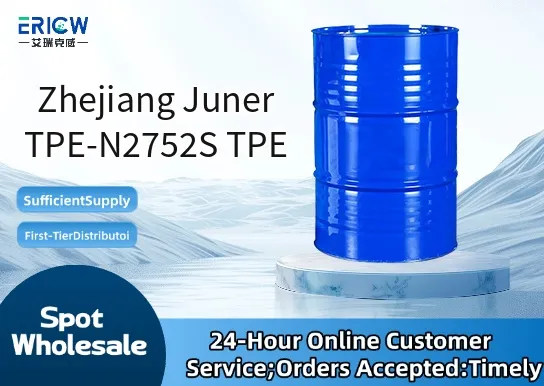
Excellent soft-touch feel with balanced hardness (Shore A 52)
Good processability on standard injection molding and extrusion equipment
Enhanced thermal stability for consistent melt flow during high-speed production
Low extractables and compliant with FDA 21 CFR §177.2600 for food-contact applications
Good resistance to UV aging and ozone, supporting extended outdoor service life
Overmolding for consumer electronics housings and grips
Sealing components in automotive interior trim and door modules
Flexible parts for medical device housings and non-invasive patient interfaces
Food-grade kitchenware handles and collapsible containers
Soft-touch grips for power tools and hand-held industrial equipment
| Chemical Type | Styrenic Thermoplastic Elastomer (TPS-SEBS based) |
| Product Form | Pellets |
| Appearance | Off-white to light beige granules |
| Hardness (Shore A) | 52 ± 3 |
| Melt Flow Rate (200°C/5 kg) | 18–22 g/10 min |
| Density | 0.92–0.94 g/cm³ |
| Operating Temperature Range | −40°C to +70°C (continuous) |
| Compliance | FDA 21 CFR §177.2600, RoHS 2015/863/EU, REACH SVHC-free |
Q1: What is the primary functional role of TPE-N2752S in polymer formulations?
A: TPE-N2752S is designed as a high-performance thermoplastic elastomer modifier, primarily used to enhance flexibility, impact resistance, and melt processability in rigid thermoplastic matrices such as PP, PS, or ABS—without compromising thermal stability during standard extrusion or injection molding.
Q2: Is TPE-N2752S suitable for applications requiring skin-contact safety or food-contact compatibility?
A: While TPE-N2752S is formulated without intentionally added heavy metals or known SVHCs, it is not pre-certified for direct food contact or medical device use. Customers intending such applications must conduct full regulatory validation—including extractables testing and compliance assessment—based on their specific end-use conditions and regional requirements.
Q3: How does TPE-N2752S perform under repeated flexing or cyclic mechanical stress?
A: Thanks to its balanced crystalline-amorphous microstructure, TPE-N2752S demonstrates excellent fatigue resistance and maintains elasticity retention over extended dynamic loading cycles—making it well-suited for hinge components, soft-touch grips, and repeatedly actuated parts in consumer and industrial assemblies.
Q4: What drying and processing conditions are recommended prior to molding?
A: For optimal results, TPE-N2752S should be dried at 60–70 °C for 2–4 hours before processing. Melt temperatures typically range between 170–210 °C depending on equipment and base resin compatibility; residence time should be minimized to avoid thermal degradation.
Contact With Us:
E-mail: wangxingqiang@ericwchem.com
Have a Questions? Call Us:
Add:
Building A1, Jiete Industrial Park, Huangpu District, Guangzhou City, Guangdong Province, China