English
 Español
 tiếng việt
 русский
High melt strength and excellent thermal stability for robust processing in extrusion and injection molding.
Outstanding elasticity and recovery performance across a wide temperature range (–40 °C to +70 °C).
Superior compatibility with polypropylene (PP) and polyethylene (PE), enabling high-performance thermoplastic vulcanizate (TPV) formulations.
Low extractables and compliant with FDA 21 CFR §177.2600 for food-contact applications.
Good UV resistance and long-term weatherability without requiring additional stabilizers in many outdoor applications.
Soft-touch overmolding for automotive interior trim, including instrument panel skins and door armrests.
Medical tubing and device components requiring biocompatibility and flexibility.
Consumer product grips for power tools, toothbrushes, and personal care devices.
Sealants and gasket compounds for HVAC and appliance housings.
Flexible packaging films requiring toughness, clarity, and seal integrity.
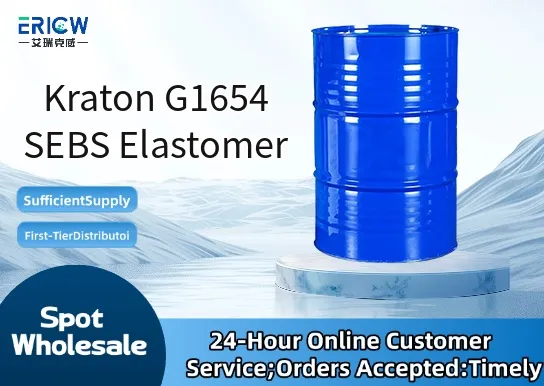
| Chemical Type | Styrene–ethylene/butylene–styrene (SEBS) triblock copolymer |
| Product Form | Pellets |
| Appearance | Off-white to light tan, free-flowing pellets |
| Primary Applications | Thermoplastic elastomer (TPE) compounding, soft-touch overmolding, medical and food-contact materials |
| Key Features | High elasticity, PP/PE compatibility, low extractables, thermal stability |
| Benefits | Enhanced processability, improved part aesthetics, regulatory compliance, recyclability in TPE streams |
| Processing Method | Extrusion, injection molding, blow molding, overmolding |
Q1: What are the key processing advantages of Kraton G1654 compared to other SEBS grades?
A: Kraton G1654 offers excellent melt flow and low viscosity in molten state, enabling efficient processing via extrusion, injection molding, and overmolding—especially onto polypropylene and other polyolefins. Its balanced triblock architecture provides good thermal stability and reduced die swell, supporting consistent part geometry and surface finish.
Q2: Can Kraton G1654 be used in medical or food-contact applications?
A: Kraton G1654 is manufactured under strict quality control and is suitable for certain medical device components and food-contact applications where regulatory compliance is supported by appropriate formulation and end-use testing. Users must validate final formulations against applicable regional requirements, as the base polymer itself does not carry pre-approved status.
Q3: How does Kraton G1654 enhance soft-touch performance in thermoplastic elastomer blends?
A: Due to its well-defined styrenic end-blocks and mid-block elasticity, Kraton G1654 imparts a smooth, low-friction surface feel and improves tactile response in PP- or PE-based TPE blends. It also contributes to reduced coefficient of friction and enhanced resistance to fingerprint retention without compromising tensile recovery.
Q4: Is Kraton G1654 compatible with common plasticizers and fillers?
A: Yes—Kraton G1654 demonstrates good compatibility with paraffinic and naphthenic oils, as well as with calcium carbonate, talc, and silica fillers. Compatibility should be verified experimentally in each specific compound system, particularly when using polar additives or reactive modifiers.
Contact With Us:
E-mail: wangxingqiang@ericwchem.com
Have a Questions? Call Us:
Add:
Building A1, Jiete Industrial Park, Huangpu District, Guangzhou City, Guangdong Province, China