English
 Español
 tiếng việt
 русский
Excellent elasticity and recovery performance at room and elevated temperatures.
Good processability via injection molding, extrusion, and overmolding onto PP, PS, and ABS substrates.
Low compression set for long-term sealing and gasketing reliability.
RoHS-compliant formulation with no added halogens or heavy metals.
Smooth surface finish and high gloss retention after processing.
Soft-touch grips for power tools and consumer electronics housings.
Seals and gaskets for automotive interior components.
Flexible hinges and living hinges in durable plastic assemblies.
Overmolded buttons and control interfaces in home appliances.
Medical device grips and non-critical tactile components (non-sterile).
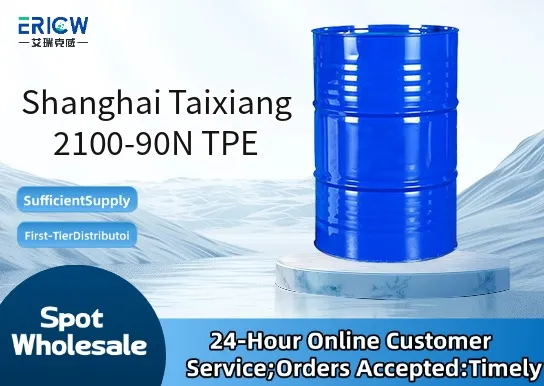
| Chemical Type | Thermoplastic Elastomer (TPE) — Styrenic Block Copolymer (SBC) based |
| Product Form | Pellets |
| Appearance | Natural translucent granules |
| Hardness (Shore A) | 90 ± 3 |
| Melt Flow Rate (230°C/2.16 kg) | 12–18 g/10 min |
| Density | 0.90–0.92 g/cm³ |
| Tensile Strength | ≈12 MPa |
| Elongation at Break | ≈450% |
Q1: What is the primary application domain for Shanghai Taixiang 2100-90N TPE?
A: This thermoplastic elastomer is primarily engineered for soft-touch overmolding applications—especially on rigid substrates such as PP, PS, ABS, and PC—where excellent adhesion, flexibility, and tactile comfort are required. It is widely used in consumer electronics housings, automotive interior trim, and hand-held tool grips.
Q2: Is 2100-90N compatible with standard injection molding equipment?
A: Yes, it processes reliably on conventional injection molding machines without requiring specialized hardware. Typical melt temperatures range between 170–210 °C, and mold temperatures are generally maintained at 20–40 °C. Drying is recommended prior to processing to minimize surface defects.
Q3: How does 2100-90N perform in terms of adhesion to common engineering plastics?
A: It demonstrates strong inherent adhesion to polypropylene (PP) and polystyrene (PS), and good bonding to ABS and PC—particularly when optimized for temperature and residence time. Surface treatment or primers are typically unnecessary for most overmolding configurations.
Q4: Can this TPE be colored or compounded with additives?
A: Yes, 2100-90N is fully compatible with standard pigment masterbatches and functional additives such as UV stabilizers, flame retardants, and antimicrobial agents—provided they are thermally stable within its processing window. Coloration is typically achieved using low-loading masterbatches to preserve mechanical performance.
Contact With Us:
E-mail: wangxingqiang@ericwchem.com
Have a Questions? Call Us:
Add:
Building A1, Jiete Industrial Park, Huangpu District, Guangzhou City, Guangdong Province, China