English
 Español
 tiếng việt
 русский
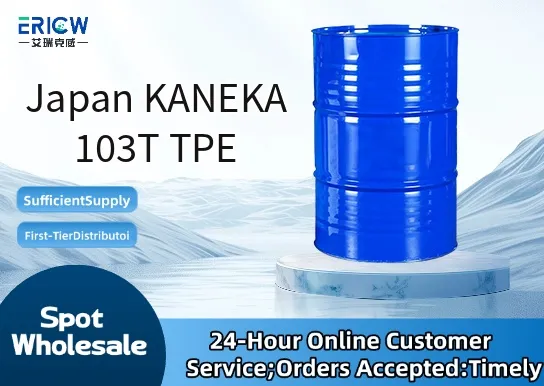
Soft-touch, skin-friendly surface texture with excellent tactile comfort.
Outstanding thermal stability for consistent processing across injection molding and extrusion.
Good adhesion to polypropylene (PP) and polyethylene (PE) substrates without primer.
Low compression set for reliable sealing and gasket performance under repeated deformation.
RoHS-compliant formulation with no phthalates, heavy metals, or halogenated flame retardants.
Overmolded grips for power tools and handheld appliances.
Seals and gaskets for automotive interior components.
Flexible hinges and soft-touch buttons in consumer electronics.
Medical device housings requiring biocompatibility and sterilization compatibility.
Household appliance trim and control knobs requiring ergonomic feel and durability.
| Chemical Type | Thermoplastic Elastomer (TPE) — Styrenic Block Copolymer (SBC) based |
| Product Form | Pellets |
| Appearance | Translucent, off-white granules |
| Hardness (Shore A) | ~103 |
| Melt Flow Rate (200°C/5 kg) | 1.5–2.5 g/10 min |
| Density | 0.90–0.92 g/cm³ |
| Key Features | Soft-touch, PP/PE adhesion, low compression set, RoHS compliant |
| Primary Applications | Overmolding, seals, grips, consumer electronics, automotive interiors |
Q1: What is the primary functional role of KANEKA 103T in TPE formulations?
A: KANEKA 103T is a high-purity, low-volatility processing aid and viscosity modifier specifically designed for thermoplastic elastomer systems. It enhances melt flow stability, reduces extrusion torque, and supports consistent dispersion of fillers and additives during compounding.
Q2: Is KANEKA 103T compatible with common TPE base polymers such as SEBS, TPO, and TPV?
A: Yes — KANEKA 103T demonstrates broad compatibility with styrenic block copolymers (e.g., SEBS), polyolefin-based TPEs (e.g., TPO), and dynamically vulcanized alloys (e.g., TPV). It integrates readily into both pellet and masterbatch production processes without phase separation under standard processing conditions.
Q3: How does KANEKA 103T affect surface appearance and gloss in finished TPE parts?
A: When used at typical dosage levels, KANEKA 103T contributes to improved surface uniformity and reduced die-lip buildup, often resulting in enhanced gloss and smoother part aesthetics — particularly in thin-wall or high-precision injection-molded applications.
Q4: Can KANEKA 103T be used in applications requiring regulatory compliance for food contact or medical devices?
A: KANEKA 103T is manufactured under stringent quality control and is widely utilized in formulations intended for regulated markets. While the base material itself is not pre-certified, it is commonly incorporated into compliant TPE systems where final formulation validation — including extractables profiling and migration assessment — is conducted by the compounder or end-user.
Contact With Us:
E-mail: wangxingqiang@ericwchem.com
Have a Questions? Call Us:
Add:
Building A1, Jiete Industrial Park, Huangpu District, Guangzhou City, Guangdong Province, China