English
 Español
 tiếng việt
 русский
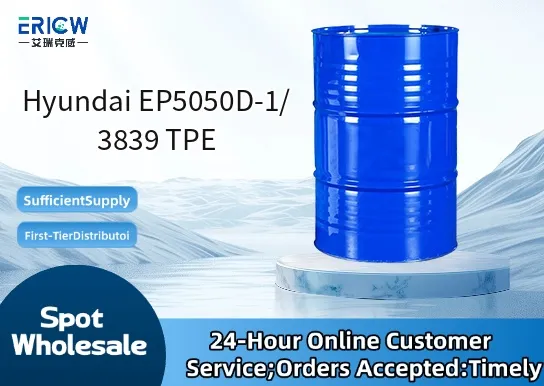
Thermoplastic elastomer (TPE) based on SEBS chemistry for excellent elasticity and resilience.
Good processability via injection molding, extrusion, and overmolding onto PP, PS, and ABS substrates.
Low compression set and high recovery performance under repeated mechanical stress.
UV-stable formulation with inherent resistance to ozone and weathering.
Halogen-free and compliant with RoHS and REACH regulatory requirements.
Soft-touch grips for power tools, hand-held electronics, and medical devices.
Sealing rings and gaskets for automotive interior components and fluid handling systems.
Overmolded ergonomic parts in consumer appliances and home improvement equipment.
Flexible hinges and snap-fit components requiring fatigue resistance and long-term flexibility.
Food-contact–compatible packaging closures (subject to final regulatory verification per application).
| Chemical Type | SEBS-based Thermoplastic Elastomer |
| Product Form | Natural pellets, free-flowing |
| Appearance | Off-white, translucent granules |
| Hardness (Shore A) | 50 ± 3 |
| Melt Flow Rate (230°C/2.16 kg) | 25–35 g/10 min |
| Density | 0.90–0.92 g/cm³ |
| Key Features | Elasticity, overmold adhesion, low-temperature flexibility |
| Benefits | Reduced part weight vs. rubber, recyclable processing, no vulcanization required |
Q1: What is the primary polymer composition of Hyundai EP5050D-1/3839 TPE?
A: Hyundai EP5050D-1/3839 is a thermoplastic elastomer based on a styrenic block copolymer (SBC) architecture, combining polystyrene end-blocks with mid-blocks offering elastomeric behavior — delivering balanced melt processability and soft-touch performance.
Q2: Is this grade suitable for overmolding onto polypropylene (PP) or polyethylene (PE) substrates?
A: Yes — EP5050D-1/3839 is specifically formulated to provide good adhesion to common polyolefin substrates such as PP and PE without requiring primers or surface treatment under standard injection molding conditions.
Q3: What are the recommended drying conditions prior to processing?
A: To ensure optimal melt stability and surface quality, it is recommended to dry EP5050D-1/3839 at 70–80 °C for 2–4 hours using dehumidified air — especially when high-gloss finishes or low moisture sensitivity are required.
Q4: Can this TPE be used in applications requiring skin contact or tactile comfort?
A: Yes — its formulation delivers a smooth, non-tacky surface and low extractables profile, making it well-suited for consumer-facing components such as grips, seals, and ergonomic overmolds where softness and haptic response are critical.
Q5: How does EP5050D-1/3839 compare to conventional SEBS-based TPEs in terms of flow and mold release?
A: It offers enhanced melt fluidity and lower viscosity compared to many standard SEBS grades, facilitating easier filling of thin-walled parts, while maintaining excellent demolding characteristics and reduced tendency for sticking in complex cavities.
Contact With Us:
E-mail: wangxingqiang@ericwchem.com
Have a Questions? Call Us:
Add:
Building A1, Jiete Industrial Park, Huangpu District, Guangzhou City, Guangdong Province, China