English
 Español
 tiếng việt
 русский
Excellent abrasion resistance for demanding mechanical service life.
Outstanding elasticity and high rebound resilience at room temperature.
Good low-temperature flexibility down to –30 °C without significant stiffness increase.
Compatible with common thermoplastic processing methods including extrusion, injection molding, and blow molding.
Hydrolysis-resistant formulation suitable for humid or moisture-exposed environments.
Automotive interior trim components requiring soft-touch feel and durability.
Industrial hoses and pneumatic tubing where flexibility and pressure retention are critical.
High-performance footwear midsoles and outsoles for athletic and work shoes.
Consumer electronics protective cases and gaskets requiring impact absorption and dimensional stability.
Medical-grade tubing and fluid-handling components compliant with ISO 10993 biocompatibility guidelines (pending validation).
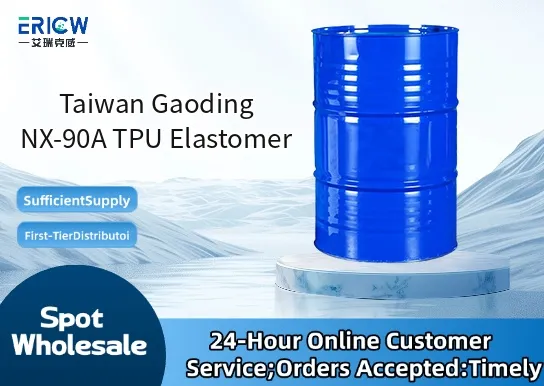
| Chemical Type | Aliphatic polyester-based thermoplastic polyurethane |
| Product Form | Pellets |
| Appearance | Translucent off-white granules |
| Hardness (Shore A) | 90 ± 2 |
| Melt Flow Index (2.16 kg, 210 °C) | 12–16 g/10 min |
| Density | 1.18–1.20 g/cm³ |
| Primary Applications | Flexible industrial parts, durable consumer goods, automotive elastomeric components |
| Key Features | Abrasion resistance, elasticity, processability, hydrolytic stability |
Q1: What are the key processing advantages of NX-90A compared to conventional TPU grades?
A: NX-90A offers enhanced melt stability and lower viscosity at processing temperatures, enabling smoother extrusion and injection molding—particularly beneficial for thin-walled or highly detailed parts. Its balanced hardness and elasticity also support reduced cycle times without compromising surface finish or mechanical recovery.
Q2: Is NX-90A suitable for applications requiring good low-temperature flexibility?
A: Yes—NX-90A maintains excellent elastomeric performance down to approximately −30 °C, retaining resilience and impact resistance in cold environments. This makes it well-suited for outdoor cables, automotive trim, and flexible industrial components exposed to seasonal temperature variation.
Q3: How does NX-90A perform in terms of abrasion and oil resistance?
A: As an aromatic polyester-based TPU, NX-90A delivers strong resistance to abrasion, tearing, and hydrocarbon oils—significantly outperforming many standard thermoplastic elastomers in dynamic wear applications such as conveyor belts, rollers, and protective coatings.
Q4: Can NX-90A be blended with other polymers to modify performance?
A: NX-90A shows good compatibility with several engineering thermoplastics—including certain grades of PC, ABS, and other TPUs—enabling tailored blends for improved impact strength, processability, or cost-performance balance. Compatibility testing under actual processing conditions is recommended before full-scale implementation.
Contact With Us:
E-mail: wangxingqiang@ericwchem.com
Have a Questions? Call Us:
Add:
Building A1, Jiete Industrial Park, Huangpu District, Guangzhou City, Guangdong Province, China