English
 Español
 tiếng việt
 русский
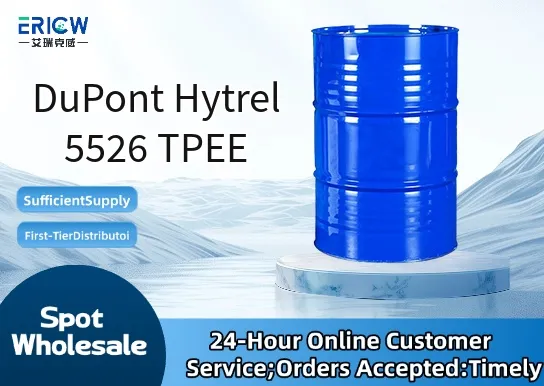
Excellent balance of thermoplastic processability and elastomeric performance at elevated temperatures.
High tensile strength and outstanding fatigue resistance for dynamic, cyclic loading applications.
Good chemical resistance to oils, greases, and many automotive fluids.
Retains flexibility and resilience over a wide service temperature range (–40 °C to +120 °C).
Easy to process via injection molding, extrusion, and blow molding with low moisture sensitivity.
Automotive air ducts and HVAC components requiring dimensional stability under thermal cycling.
Powertrain mounts and bushings demanding high damping and long-term creep resistance.
Industrial hose and tubing for compressed air and hydraulic fluid transfer.
Consumer appliance parts such as washing machine door seals and dishwasher pump housings.
Medical device components requiring biocompatibility support (ISO 10993 tested options available).
| Chemical Type | Thermoplastic Polyester Elastomer (TPEE) |
| Product Form | Pellets |
| Appearance | Beige, semi-crystalline granules |
| Primary Applications | Dynamic structural components, flexible ducting, vibration-damping parts |
| Key Features | High modulus, excellent rebound, low compression set |
| Benefits | Reduced part count vs. multi-material assemblies; recyclable thermoplastic processing |
| Density (ASTM D792) | 1.21 g/cm³ |
| Melt Flow Rate (230 °C/2.16 kg, ASTM D1238) | 20 g/10 min |
Q1: What distinguishes Hytrel 5526 from other TPEE grades in the Hytrel portfolio?
A: Hytrel 5526 is a medium-hardness thermoplastic elastomer with balanced stiffness and elasticity, offering enhanced melt processability and improved low-temperature flexibility compared to higher-hardness grades like 5556 or 6356. It is particularly suited for applications requiring repeated flexing without permanent deformation.
Q2: Can Hytrel 5526 be processed using standard thermoplastic equipment?
A: Yes — Hytrel 5526 is fully compatible with conventional thermoplastic processing methods including injection molding, extrusion, and blow molding. Pre-drying is recommended to minimize moisture-related surface defects, and optimal melt temperatures typically fall within the range of 240–270 °C depending on part geometry and cycle requirements.
Q3: Is Hytrel 5526 suitable for dynamic sealing or flexible coupling applications?
A: Yes — its excellent fatigue resistance, resilience, and retention of mechanical properties under cyclic loading make it well-suited for dynamic seals, bellows, and flexible drive components where long-term dimensional stability and rebound performance are critical.
Q4: How does Hytrel 5526 perform in contact with common automotive fluids?
A: Hytrel 5526 demonstrates good resistance to many automotive fluids including engine oils, transmission fluids, and brake fluids at ambient and moderately elevated temperatures. For extended exposure or high-temperature service, compatibility testing under actual application conditions is advised.
Contact With Us:
E-mail: wangxingqiang@ericwchem.com
Have a Questions? Call Us:
Add:
Building A1, Jiete Industrial Park, Huangpu District, Guangzhou City, Guangdong Province, China