English
 Español
 tiếng việt
 русский
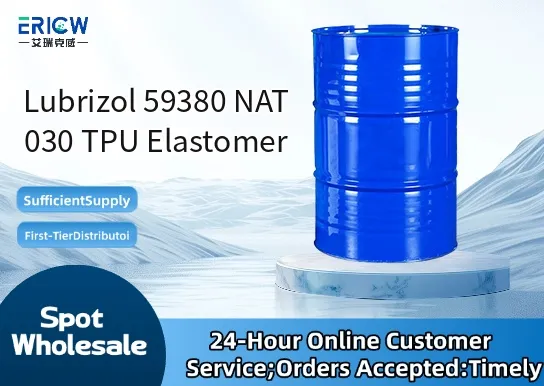
High melt flow index for excellent processability in extrusion and injection molding.
Outstanding abrasion resistance and mechanical toughness at ambient and elevated temperatures.
Good low-temperature flexibility with retained elasticity down to –40 °C.
Hydrolysis-stabilized formulation for enhanced durability in humid or wet environments.
Transparency-friendly grade suitable for clear or tinted aesthetic applications.
Wire and cable jacketing requiring flexibility, flame retardancy (when compounded), and environmental resistance.
Automotive interior trim components including soft-touch overlays and instrument panel skins.
Medical tubing and fluid-handling devices where biocompatibility (ISO 10993-compliant formulations possible) and kink resistance are critical.
Consumer electronics protective cases and wearable device bands demanding clarity, grip, and long-term resilience.
Industrial hoses and pneumatic tubing requiring oil and ozone resistance.
| Chemical Type | Aliphatic polyester-based thermoplastic polyurethane (TPU) |
| Product Form | Pellets |
| Appearance | Natural, translucent pellets |
| Primary Applications | Extrusion, injection molding, blow molding |
| Key Features | Hydrolysis resistance, high clarity, good UV stability, low extractables |
| Processing Temperature Range | 180–210 °C (melt processing) |
| Density (ASTM D792) | 1.18–1.20 g/cm³ |
| Melt Flow Index (210 °C/2.16 kg, ASTM D1238) | 10–14 g/10 min |
Q1: What is the primary function of Lubrizol 59380 NAT 030 in TPU formulations?
A: Lubrizol 59380 NAT 030 is a specialty additive designed to enhance surface lubricity and reduce coefficient of friction in thermoplastic polyurethane (TPU) compounds, particularly for applications requiring smooth processing, improved release, or tactile softness.
Q2: Is this product compatible with all common TPU chemistries (e.g., polyester- and polyether-based TPUs)?
A: Yes, Lubrizol 59380 NAT 030 demonstrates broad compatibility across major TPU families, including aromatic and aliphatic polyester- and polyether-based systems. Compatibility should still be verified under actual processing conditions and end-use requirements.
Q3: How is Lubrizol 59380 NAT 030 typically incorporated into TPU compounds?
A: It is generally introduced via dry blending with TPU pellets prior to extrusion or injection molding. Melt compounding at standard TPU processing temperatures is effective, and uniform dispersion is readily achieved without specialized equipment.
Q4: Does this additive affect the mechanical properties or thermal stability of the final TPU part?
A: When used within recommended dosage ranges, Lubrizol 59380 NAT 030 has minimal impact on tensile strength, elongation, or heat resistance. Some reduction in hardness may occur at higher loadings, so optimization for each application is advised.
Q5: Can Lubrizol 59380 NAT 030 support regulatory compliance for food-contact or medical applications?
A: Lubrizol 59380 NAT 030 is not pre-approved for direct food-contact or medical device use. Its suitability for regulated applications depends on full formulation evaluation, including migration testing and regulatory review by the end-user’s compliance team.
Contact With Us:
E-mail: wangxingqiang@ericwchem.com
Have a Questions? Call Us:
Add:
Building A1, Jiete Industrial Park, Huangpu District, Guangzhou City, Guangdong Province, China