English
 Español
 tiếng việt
 русский
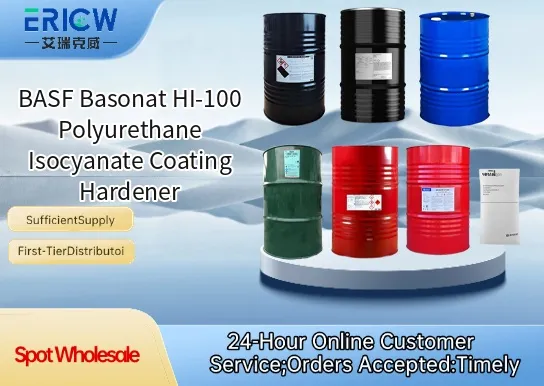
High-reactivity aliphatic isocyanate blend based on HDI (hexamethylene diisocyanate) trimer chemistry.
Excellent UV stability and color retention — ideal for topcoats requiring long-term gloss and clarity.
Low viscosity for easy handling, precise metering, and optimal compatibility with a broad range of hydroxyl-functional resins.
Complies with major global VOC regulations for industrial coating systems, supporting sustainable formulation design.
Consistent reactivity profile ensures reliable pot life control and robust film formation under varied ambient conditions.
Aerospace exterior and interior protective coatings.
Automotive OEM and refinish clearcoats and basecoat/clearcoat systems.
Railway vehicle topcoats requiring weather resistance and mechanical durability.
Industrial maintenance coatings for heavy-duty equipment and infrastructure.
High-performance plastic coatings for automotive trim and electronics housings.
| Chemical Type | Aliphatic HDI-based isocyanurate trimer |
| Product Form | Liquid |
| Appearance | Clear, pale yellow to colorless liquid |
| NCO Content (wt %) | Approx. 15.5–16.5% |
| Viscosity at 25°C (mPa·s) | 1,200–1,800 |
| Density at 20°C (g/cm³) | 1.17–1.21 |
| Primary Applications | Two-component polyurethane topcoats and high-performance industrial finishes |
| Key Features | UV-stable, low-VOC, high-gloss retention, excellent chemical resistance |
Q1: What is the primary function of Basonat HI-100 in polyurethane coating systems?
A: Basonat HI-100 serves as a reactive hardener (crosslinker) that reacts with hydroxyl-functional resins—such as acrylics, polyesters, or alkyds—to form durable, chemically resistant polyurethane networks. It enables ambient- or low-bake cure profiles while delivering excellent hardness, gloss retention, and weatherability.
Q2: How does Basonat HI-100 differ from traditional HDI-based isocyanate hardeners?
A: Unlike conventional HDI trimer or biuret hardeners, Basonat HI-100 is a specially stabilized, low-viscosity hexamethylene diisocyanate (HDI)–based polyisocyanate designed for enhanced compatibility with high-solids and solvent-reduced formulations. Its optimized molecular architecture supports improved pot life, reduced VOC contribution, and better film formation without sacrificing reactivity.
Q3: What are the recommended storage conditions to maintain product stability?
A: Store Basonat HI-100 in tightly sealed original containers under dry, cool conditions (typically below 30 °C), protected from moisture, direct sunlight, and incompatible materials such as water, alcohols, or amines. Prolonged exposure to humidity may lead to premature gelation or viscosity increase due to isocyanate reaction with ambient moisture.
Q4: Can Basonat HI-100 be used in automotive refinish or industrial maintenance coatings?
A: Yes—Basonat HI-100 is widely employed in high-performance industrial maintenance, general metal finishing, and automotive refinish applications where superior chemical resistance, flexibility, and rapid through-cure are required. It is especially suited for two-component (2K) systems targeting demanding durability and aesthetic performance.
Q5: What safety precautions should be observed during handling?
A: As with all isocyanate-containing products, appropriate personal protective equipment (PPE) including nitrile gloves, chemical-resistant goggles, and respiratory protection (e.g., organic vapor cartridges) is essential. Ensure adequate ventilation during mixing and application. Avoid skin contact and inhalation of vapors or aerosols, and refer to the current Safety Data Sheet (SDS) for comprehensive handling and emergency response guidance.
Contact With Us:
E-mail: wangxingqiang@ericwchem.com
Have a Questions? Call Us:
Add:
Building A1, Jiete Industrial Park, Huangpu District, Guangzhou City, Guangdong Province, China