English
 Español
 tiếng việt
 русский
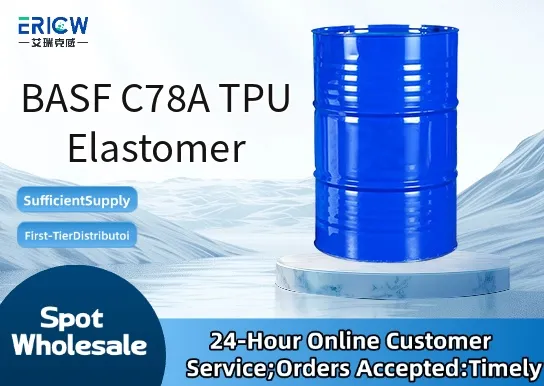
Excellent abrasion resistance for extended service life in demanding mechanical environments.
Outstanding elasticity and recovery performance across a wide temperature range (–40 °C to +80 °C).
Good oil, grease, and hydrocarbon resistance suitable for industrial and automotive exposure.
High melt processability enabling efficient extrusion, injection molding, and calendering.
Low compression set ensuring dimensional stability under prolonged dynamic loading.
Automotive interior trim components including instrument panel skins and door inserts.
Industrial hoses and pneumatic tubing requiring flexibility and pressure resistance.
Conveyor belts and drive belts where wear resistance and tensile strength are critical.
Footwear midsoles and outsoles offering energy return and impact absorption.
Medical device tubing and protective sheathing compliant with ISO 10993 biocompatibility guidelines.
| Chemical Type | Thermoplastic Polyurethane (TPU), polyester-based |
| Product Form | Pellets |
| Appearance | Off-white to light beige, free-flowing granules |
| Primary Applications | Extrusion, injection molding, calendering |
| Key Features | Abrasion resistance, elasticity, oil resistance, melt processability |
| Benefits | Long-term durability, design freedom, recyclability, replacement for vulcanized rubber |
| Processing Temperature Range | 180–220 °C (melt) |
| Storage Conditions | Keep in dry, ventilated area; protect from moisture and direct sunlight |
Q1: What is the primary application profile of BASF C78A TPU Elastomer?
A: BASF C78A is a thermoplastic polyurethane elastomer designed for extrusion and injection molding processes, commonly used in demanding applications requiring excellent abrasion resistance, flexibility at low temperatures, and good melt processability—such as technical hoses, industrial belts, and soft-touch overmolding components.
Q2: Is BASF C78A suitable for food-contact or medical applications?
A: BASF C78A is not pre-qualified for direct food-contact or medical device applications. Its suitability for such uses depends on full regulatory assessment by the end-product manufacturer, including compatibility with intended processing conditions and final-use requirements. Customers should consult BASF’s regulatory documentation and perform appropriate validation testing.
Q3: How does C78A compare to other TPU grades in terms of hardness and processing behavior?
A: C78A is a medium-hardness TPU grade offering a balanced combination of mechanical strength and melt flow—typically easier to process than higher-hardness TPUs while maintaining better dimensional stability than softer, more flexible grades. It exhibits good thermal stability during extrusion and responds well to standard drying and molding protocols for aromatic TPUs.
Q4: Can C78A be blended or alloyed with other polymers?
A: C78A demonstrates reasonable compatibility with certain engineering thermoplastics and other TPUs, particularly those with similar polarity and thermal profiles. However, blend performance—including morphology, phase adhesion, and mechanical retention—must be evaluated case by case. Compatibility testing and rheological screening are recommended before commercial implementation.
Contact With Us:
E-mail: wangxingqiang@ericwchem.com
Have a Questions? Call Us:
Add:
Building A1, Jiete Industrial Park, Huangpu District, Guangzhou City, Guangdong Province, China