English
 Español
 tiếng việt
 русский
Excellent melt processability for high-speed extrusion and injection molding
Superior low-temperature flexibility and impact resistance
Outstanding sealing performance with broad heat-seal initiation range
Good compatibility with polypropylene (PP) and polyethylene (PE) for alloy formulations
Low extractables and compliant with FDA 21 CFR §177.1520 for food-contact applications
Flexible packaging films, including stand-up pouches and lamination layers
Soft-touch overmolding for automotive interior trim and grips
Sealant layers in multilayer medical packaging
Toughened polypropylene compounds for appliance housings
Weather-resistant elastomeric profiles for building and construction
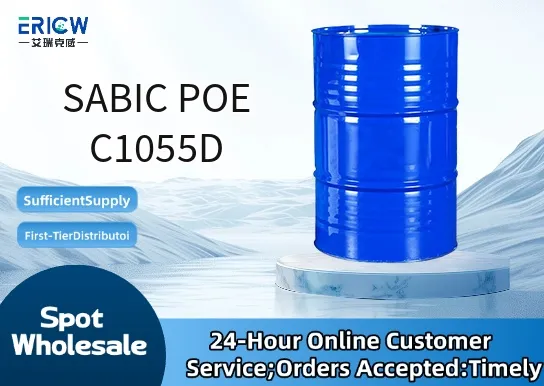
| Chemical Type | Polyolefin Elastomer (POE), ethylene-octene copolymer |
| Product Form | Pellets |
| Appearance | Off-white to light beige, free-flowing cylindrical pellets |
| Primary Applications | Flexible packaging, PP/PE toughening, soft-touch overmolding |
| Key Features | Low density, high elasticity, excellent clarity in thin films |
| Benefits | Reduced energy consumption during processing; improved end-product durability and seal integrity |
| Processing Method | Extrusion, injection molding, blow molding |
| Regulatory Compliance | FDA 21 CFR §177.1520, EU Regulation (EC) No. 10/2011 (food contact) |
Q1: What is the primary function of SABIC POE C1055D in polymer blends?
A: SABIC POE C1055D is an ethylene-octene copolymer designed primarily as a toughening agent and impact modifier for polyolefin-based systems, especially in PP and HDPE blends. It enhances low-temperature ductility and improves resistance to crack propagation without significantly compromising stiffness or processability.
Q2: Is SABIC POE C1055D suitable for food-contact applications?
A: SABIC POE C1055D is manufactured to meet general-purpose polymer purity requirements and is commonly used in food packaging structures where regulatory compliance is managed at the final article level. End-use suitability depends on full formulation evaluation and adherence to applicable regional food contact regulations — users should consult local regulatory authorities and perform required migration testing.
Q3: How does SABIC POE C1055D compare to other POEs in terms of melt flow and processing behavior?
A: SABIC POE C1055D features a balanced melt rheology optimized for conventional extrusion and injection molding processes. Its melt flow index supports good dispersion in molten polyolefins while maintaining sufficient melt strength for stable processing — typically easier to incorporate than higher-MI grades and more flowable than very low-MI elastomers.
Q4: Can SABIC POE C1055D be used in thermoplastic vulcanizates (TPVs)?
A: Yes, SABIC POE C1055D is frequently employed as a soft-phase component or co-elastomer in dynamically vulcanized TPV formulations, particularly those based on EPDM/PP systems. Its compatibility with polypropylene matrices and thermal stability during dynamic vulcanization make it well-suited for enhancing elasticity and compression set performance.
Contact With Us:
E-mail: wangxingqiang@ericwchem.com
Have a Questions? Call Us:
Add:
Building A1, Jiete Industrial Park, Huangpu District, Guangzhou City, Guangdong Province, China