English
 Español
 tiếng việt
 русский
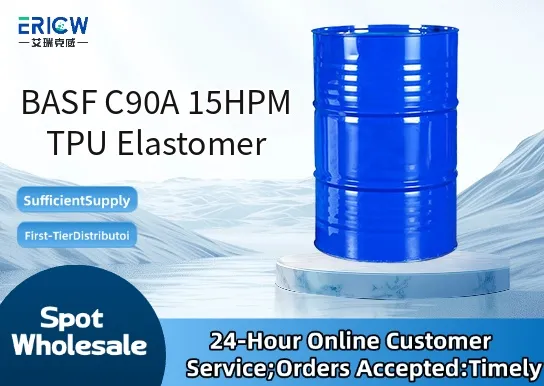
Excellent abrasion resistance for demanding mechanical service life requirements.
High tensile strength and elongation at break, enabling robust performance under dynamic loading.
Good low-temperature flexibility down to –30 °C without significant loss of elasticity.
Outstanding processability via injection molding and extrusion due to balanced melt viscosity and thermal stability.
Hydrolysis-resistant formulation suitable for humid or wet-environment applications.
Automotive interior trim components including instrument panel skins and door inserts.
Industrial hoses and pneumatic tubing requiring oil and ozone resistance.
Consumer electronics protective casings and flexible connectors.
Medical device housings and non-implantable wearable components.
Footwear midsoles and outsoles requiring rebound resilience and wear durability.
| Chemical Type | Thermoplastic Polyurethane (Aliphatic Polyester-based) |
| Product Form | Pellets |
| Appearance | Off-white to light beige, free-flowing granules |
| Primary Applications | Injection molding, extrusion, thermoforming |
| Key Features | Abrasion resistance, hydrolysis stability, low-temperature flexibility |
| Benefits | Reduced part wear, extended service life, consistent processing behavior |
| Density (g/cm³) | 1.18–1.20 (ISO 1183) |
| Melt Flow Index (230 °C/2.16 kg, g/10 min) | 12–16 (ISO 1133) |
Q1: What is the primary function of BASF C90A 15HPM in TPU formulations?
A: BASF C90A 15HPM is a high-performance processing aid designed to improve melt flow, reduce extrusion torque, and enhance surface finish in thermoplastic polyurethane (TPU) compounds—particularly during calendering, film casting, and profile extrusion.
Q2: Is C90A 15HPM compatible with all TPU chemistries (e.g., polyester-, polyether-, and polycaprolactone-based)?
A: Yes, C90A 15HPM demonstrates broad compatibility across major TPU families. It is especially effective in aromatic polyester TPUs commonly used for demanding mechanical and abrasion-resistant applications, but performance optimization may vary depending on base polymer polarity and molecular weight.
Q3: How does C90A 15HPM affect final TPU part properties such as tensile strength or elasticity?
A: When used at recommended dosage levels, C90A 15HPM typically maintains key mechanical properties—including tensile strength, elongation at break, and rebound resilience—while significantly improving processability. Minor reductions in modulus may occur at higher loadings, so formulation balancing is advised.
Q4: Can C90A 15HPM be used in applications requiring food contact or medical compliance?
A: C90A 15HPM is not pre-qualified for direct food-contact or medical device applications. Its use in regulated end-uses requires full formulation evaluation—including migration testing and regulatory review—by the compounder or end-user to confirm compliance with applicable regional requirements.
Contact With Us:
E-mail: wangxingqiang@ericwchem.com
Have a Questions? Call Us:
Add:
Building A1, Jiete Industrial Park, Huangpu District, Guangzhou City, Guangdong Province, China