English
 Español
 tiếng việt
 русский
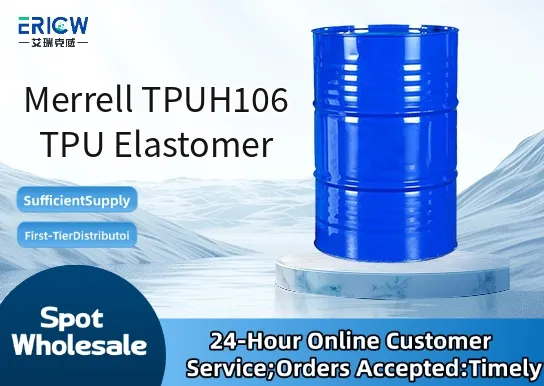
Excellent melt processability for extrusion, injection molding, and blow molding
High abrasion resistance and mechanical toughness at ambient and elevated temperatures
Good low-temperature flexibility with retained elasticity down to –30 °C
Outstanding oil, grease, and hydrocarbon resistance
Hydrolysis-stabilized formulation for enhanced durability in humid or aqueous environments
Automotive interior trim components including instrument panel skins and door panels
Industrial hoses and fluid-conveying tubing requiring chemical resilience
Flexible couplings and dynamic sealing elements in machinery
High-performance footwear midsoles and outsoles demanding rebound and wear resistance
Medical-grade tubing and non-implantable device housings compliant with ISO 10993 pre-screening
| Chemical Type | Aliphatic polyester-based thermoplastic polyurethane |
| Product Form | Natural pellets (free-flowing, non-dusty) |
| Appearance | Translucent off-white granules |
| Primary Applications | Extruded profiles, molded parts, soft-touch overmolding |
| Key Features | Hydrolysis resistance, UV stability (with additive package), high tensile strength |
| Processing Temperature Range | 180–220 °C (recommended melt temperature) |
| Density | 1.18–1.20 g/cm³ (ASTM D792) |
| Hardness (Shore A) | 95 ± 2 (ASTM D2240) |
Q1: What is the primary polymer architecture and key performance advantage of TPUH106?
A: TPUH106 is a polyester-based thermoplastic polyurethane elastomer offering an optimized balance of melt processability, tensile resilience, and abrasion resistance—particularly suited for extrusion and injection molding of flexible, durable components.
Q2: Is TPUH106 compatible with common engineering thermoplastics for alloying or co-extrusion?
A: Yes—TPUH106 demonstrates good compatibility with polyesters (e.g., PET, PBT) and certain polyolefins when used with appropriate compatibilizers; it is frequently employed in soft-touch overmolding and multi-layer film structures where interfacial adhesion and thermal stability are critical.
Q3: What drying conditions are recommended prior to processing?
A: To ensure optimal melt quality and mechanical properties, drying at 80–90 °C for 3–4 hours under dehumidified air is generally recommended—moisture content should be maintained below 0.05% before processing.
Q4: How does TPUH106 perform under repeated flexing or dynamic mechanical stress?
A: Thanks to its high elasticity recovery and low permanent set, TPUH106 maintains structural integrity and surface finish across extended cyclic loading—making it well-suited for applications such as bellows, gaskets, and wearable device housings subject to frequent deformation.
Q5: Can TPUH106 be processed on standard thermoplastic equipment without modification?
A: Yes—TPUH106 processes reliably on conventional single-screw extruders and injection molding machines equipped with general-purpose screws and standard temperature profiles; no specialized tooling or hardware is required for typical production setups.
Contact With Us:
E-mail: wangxingqiang@ericwchem.com
Have a Questions? Call Us:
Add:
Building A1, Jiete Industrial Park, Huangpu District, Guangzhou City, Guangdong Province, China