English
 Español
 tiếng việt
 русский
Excellent abrasion resistance suitable for demanding mechanical environments.
Good low-temperature flexibility down to –30 °C without significant loss of elasticity.
Outstanding oil and grease resistance for long-term performance in lubricated systems.
High melt processability with consistent rheology for reliable extrusion and injection molding.
Hydrolysis-stabilized formulation ensuring extended service life under humid or wet conditions.
Industrial conveyor belts and modular plastic chains.
Automotive interior trim components and protective gaskets.
Flexible hoses and pneumatic tubing for compressed air systems.
Roller covers and precision metering rollers for printing and packaging equipment.
Footwear midsoles and technical sport components requiring rebound and durability.
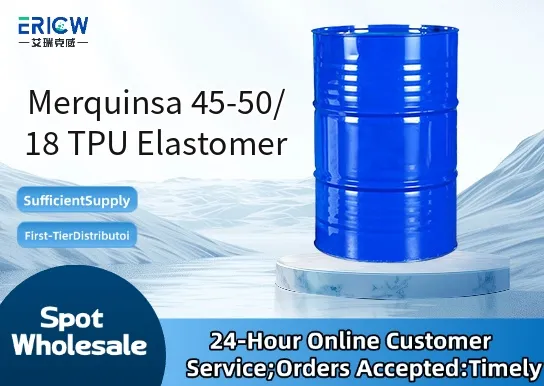
| Chemical Type | Thermoplastic Polyurethane (TPU), Polyester-based |
| Product Form | Pellets |
| Appearance | Off-white to light beige, free-flowing granules |
| Hardness (Shore A) | 45–50 |
| Melt Flow Index (230 °C / 2.16 kg) | 18 g/10 min |
| Density | 1.18–1.22 g/cm³ |
| Processing Temperature Range | 190–220 °C |
| Key Features | Hydrolysis-resistant, high resilience, excellent tear strength |
Q1: What is the primary application domain for Merquinsa 45-50/18 TPU Elastomer?
A: Merquinsa 45-50/18 is a thermoplastic polyurethane elastomer specifically engineered for demanding extrusion and injection molding applications, including high-performance tubing, automotive interior trim, and flexible industrial components requiring excellent melt processability and surface aesthetics.
Q2: How does this grade differ from other Merquinsa TPU elastomers in terms of processing behavior?
A: Merquinsa 45-50/18 features a balanced combination of medium hardness and enhanced melt flow, enabling stable extrusion at lower temperatures and reduced shear sensitivity compared to higher-hardness grades—making it especially suitable for thin-wall profiles and complex geometries.
Q3: Is drying required before processing, and what are the recommended conditions?
A: Yes—like most TPUs, Merquinsa 45-50/18 is hygroscopic and must be thoroughly dried prior to processing. Typical drying involves 3–4 hours at 80–90 °C with dew point below −30 °C, using desiccant or dehumidifying dryers to ensure optimal melt stability and surface quality.
Q4: Can this TPU be used in contact with food or potable water applications?
A: Merquinsa 45-50/18 is not pre-certified for food-contact or potable water use. Its suitability for such applications depends on final formulation, processing conditions, and compliance verification against relevant regional regulatory frameworks—consult Merquinsa’s technical team for guidance on qualifying specific end-use scenarios.
Contact With Us:
E-mail: wangxingqiang@ericwchem.com
Have a Questions? Call Us:
Add:
Building A1, Jiete Industrial Park, Huangpu District, Guangzhou City, Guangdong Province, China