English
 Español
 tiếng việt
 русский
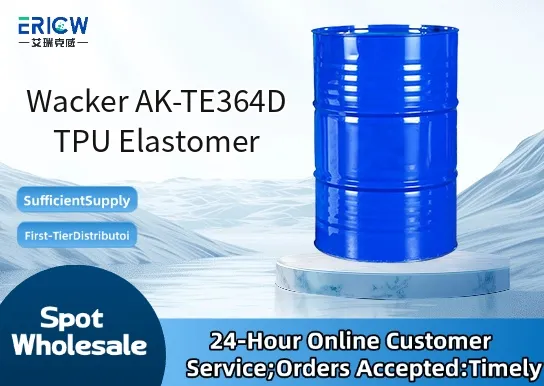
Excellent abrasion and tear resistance for demanding mechanical environments.
Outstanding low-temperature flexibility down to –40 °C.
Good resistance to oils, greases, and many common industrial chemicals.
High transparency and excellent optical clarity in thin-section applications.
Processable via standard thermoplastic techniques including injection molding and extrusion.
Transparent protective films for electronic displays and touch panels.
Flexible medical tubing requiring biocompatibility and clarity.
High-performance gaskets and seals in automotive interior components.
Wear-resistant overmolding for consumer electronics housings.
Optical-grade light guides and diffuser components.
| Chemical Type | Aliphatic polyester-based thermoplastic polyurethane (TPU) |
| Product Form | Pellets |
| Appearance | Translucent, colorless pellets |
| Primary Applications | Optical components, medical devices, protective films, precision seals |
| Key Features | High clarity, hydrolysis resistance, low-temperature toughness |
| Benefits | Reduced yellowing vs. aromatic TPUs; suitable for long-term indoor and controlled-environment use |
| Processing Method | Injection molding, extrusion, blow molding |
| Compliance | Meets ISO 10993-5 for cytotoxicity; RoHS compliant |
Q1: What is the primary function of AK-TE364D in TPU formulations?
A: AK-TE364D is a thermoplastic polyurethane (TPU) elastomer designed to enhance melt processability and improve surface finish in extruded or injection-molded TPU parts. It functions as a high-performance modifier that supports consistent flow behavior and reduced die swell without compromising mechanical resilience.
Q2: Is AK-TE364D compatible with aromatic and aliphatic TPU base resins?
A: Yes, AK-TE364D demonstrates broad compatibility with both aromatic and aliphatic TPU systems. Its molecular architecture enables effective dispersion and interfacial adhesion across common commercial TPU grades, supporting stable blends during compounding and processing.
Q3: How does AK-TE364D affect thermal stability during processing?
A: AK-TE364D maintains good thermal stability under standard TPU processing conditions (e.g., extrusion at 170–220 °C). It shows minimal degradation onset and supports consistent rheological performance across typical residence times, making it suitable for high-output manufacturing environments.
Q4: Can AK-TE364D be used in applications requiring regulatory compliance for indirect food contact?
A: While AK-TE364D itself is not pre-certified for food-contact applications, its composition is based on raw materials commonly employed in regulated polymer systems. Formulators should conduct full regulatory evaluation—including migration testing and compliance verification—within their final compound and intended use conditions.
Contact With Us:
E-mail: wangxingqiang@ericwchem.com
Have a Questions? Call Us:
Add:
Building A1, Jiete Industrial Park, Huangpu District, Guangzhou City, Guangdong Province, China