English
 Español
 tiếng việt
 русский
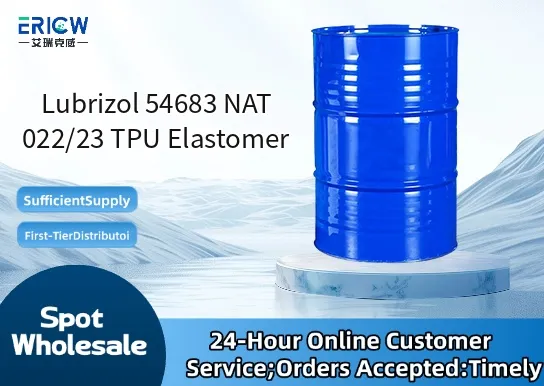
High abrasion resistance for extended service life in demanding mechanical environments.
Excellent low-temperature flexibility down to –30 °C, maintaining elasticity and impact resilience.
Good hydrolytic stability, enabling reliable performance in humid or wet conditions.
Processable via standard thermoplastic techniques including extrusion, injection molding, and calendering.
Compatible with common TPU compounding additives and colorants for tailored formulation development.
Industrial hoses and tubing requiring kink resistance and pressure retention.
Dynamic automotive components such as dust caps, grommets, and interior trim seals.
Consumer electronics protective casings and flexible cable jackets.
Footwear midsoles and outsoles where rebound, comfort, and wear resistance are critical.
Medical device tubing and non-implantable elastomeric components meeting ISO 10993-5 compatibility expectations.
| Chemical Type | Aliphatic polyester-based thermoplastic polyurethane (TPU) |
| Product Form | Pellets |
| Appearance | Off-white to light tan, free-flowing granules |
| Primary Applications | Extruded profiles, molded parts, flexible tubing, and coated fabrics |
| Key Features | Abrasion resistance, low-temperature flexibility, hydrolysis resistance |
| Benefits | Reduced part wear, consistent processing, improved durability in variable climates |
| Processing Temperature Range | 170–210 °C (recommended barrel temperature profile) |
| Storage Conditions | Store in original sealed packaging at <25 °C and <50% RH; dry before processing |
Q1: What is the primary functional role of Lubrizol 54683 NAT 022/23 in TPU formulations?
A: Lubrizol 54683 NAT 022/23 is a specialized polymeric additive designed to enhance melt processability and reduce surface friction in thermoplastic polyurethane (TPU) compounds. It functions as an internal lubricant and processing aid, improving extrusion stability, reducing die build-up, and supporting consistent pelletization or film casting.
Q2: Is this product compatible with all common TPU chemistries (e.g., polyester-, polyether-, and polycaprolactone-based TPUs)?
A: Lubrizol 54683 NAT 022/23 demonstrates broad compatibility across major TPU families, including polyester-, polyether-, and polycaprolactone-based systems. Performance optimization may vary depending on polymer polarity and molecular weight, so formulation-specific evaluation is recommended for critical applications.
Q3: How does this additive affect the mechanical properties of finished TPU parts?
A: When used at typical dosage levels, Lubrizol 54683 NAT 022/23 has minimal impact on tensile strength, elongation, or hardness. It is engineered to preserve key elastomeric performance while improving process efficiency—however, high loadings may slightly reduce surface tack and influence low-temperature flexibility.
Q4: Can it be used in applications requiring direct food contact or medical device components?
A: Lubrizol 54683 NAT 022/23 is not pre-qualified for regulated end uses such as food-contact or medical devices. Its suitability for such applications depends on full system validation—including migration testing, biocompatibility assessment, and regulatory review—conducted by the compounder or end-user under applicable jurisdictional requirements.
Contact With Us:
E-mail: wangxingqiang@ericwchem.com
Have a Questions? Call Us:
Add:
Building A1, Jiete Industrial Park, Huangpu District, Guangzhou City, Guangdong Province, China