English
 Español
 tiếng việt
 русский
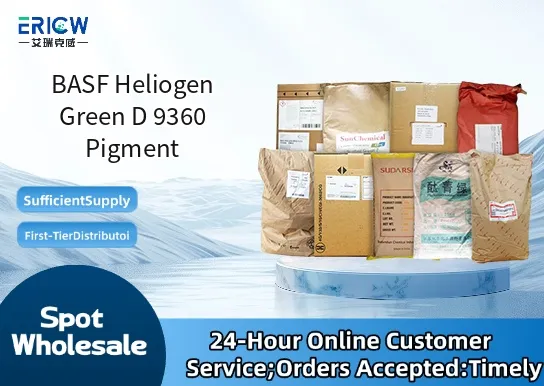
High chroma, brilliant green shade with excellent lightfastness and weather resistance.
Outstanding thermal stability suitable for high-temperature processing up to 280 °C.
Low volatility and minimal migration in polymer matrices, ensuring color consistency over time.
Good dispersibility in both polar and non-polar media, including polyolefins, PVC, and engineering plastics.
Compliant with major global regulatory frameworks, including EU REACH and US FDA 21 CFR for indirect food contact applications.
Automotive interior and exterior plastic components (e.g., dashboards, grilles, trim).
Packaging films and containers requiring long-term color stability under UV exposure.
Household appliances and consumer electronics housings.
Industrial coatings for machinery and metal parts requiring durable green pigmentation.
Masterbatch production for injection-molded and extruded plastic articles.
| Chemical Type | Phthalocyanine-based organic pigment (C.I. Pigment Green 7) |
| Product Form | Free-flowing powder |
| Appearance | Green crystalline powder |
| Primary Applications | Polyolefins, PVC, PS, ABS, and thermoset coatings |
| Key Features | High tinctorial strength, excellent heat stability, low dusting |
| Benefits | Consistent batch-to-batch performance, easy dispersion, reduced filtration effort |
| Storage Conditions | Store in cool, dry place; protect from moisture and direct sunlight |
| Shelf Life | 36 months under recommended storage conditions |
Q1: What is the primary chemical class and crystal structure of Heliogen Green D 9360?
A: Heliogen Green D 9360 is a high-performance copper phthalocyanine-based pigment, specifically formulated as the alpha-phase polymorph. Its molecular architecture delivers exceptional green hue strength, thermal stability, and lightfastness in demanding applications.
Q2: Is this pigment suitable for use in food-contact plastics or packaging inks?
A: Heliogen Green D 9360 is not approved for direct food-contact applications under major global regulatory frameworks. It is intended for non-food-contact industrial coatings, automotive finishes, and general-purpose plastics where high chroma and durability are required.
Q3: How does its dispersibility compare in water-based versus solvent-based systems?
A: The pigment exhibits good dispersibility in both polar solvent-based systems and aqueous dispersions when processed with appropriate surfactants or polymeric dispersants. Optimal performance typically requires high-shear dispersion to achieve full color development and stable rheology.
Q4: What are typical dosage ranges in plastic masterbatches and coil coating formulations?
A: Dosage depends on formulation requirements and desired opacity or transparency, but it is generally used at low concentrations — typically ranging from 0.1% to 2% by weight in thermoplastic masterbatches and from 0.5% to 1.5% in coil coating pigmented primers.
Contact With Us:
E-mail: wangxingqiang@ericwchem.com
Have a Questions? Call Us:
Add:
Building A1, Jiete Industrial Park, Huangpu District, Guangzhou City, Guangdong Province, China