English
 Español
 tiếng việt
 русский
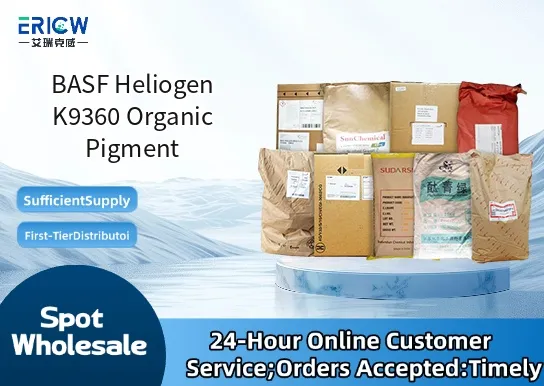
High chroma and excellent lightfastness in demanding outdoor applications.
Outstanding thermal stability up to 280 °C, suitable for high-temperature processing.
Good dispersibility in both polar and non-polar polymer matrices.
Low migration tendency in PVC, polyolefins, and engineering plastics.
Compliant with major global regulatory frameworks including EU REACH and US FDA 21 CFR for selected applications.
Automotive interior and exterior plastic components.
High-performance industrial coatings for architectural and agricultural equipment.
Color concentrates for injection-molded polypropylene (PP) and polyethylene (PE).
Engineering thermoplastics such as ABS and PC/ABS blends.
Masterbatches for wire & cable jacketing requiring UV resistance.
| Chemical Type | Polycyclic quinacridone derivative |
| Product Form | Free-flowing powder |
| Appearance | Reddish-violet fine powder |
| Primary Applications | Plastics, coatings, and masterbatches |
| Key Features | High tinctorial strength, excellent weathering resistance |
| Benefits | Consistent color reproducibility and low dust generation |
| Storage Conditions | Store in cool, dry place below 30 °C; protect from moisture |
| Regulatory Status | REACH registered; compliant with ISO 9001 manufacturing standards |
Q1: What is the primary chemical class and typical hue profile of Heliogen K9360?
A: Heliogen K9360 is a high-performance perylene-based organic pigment, offering a clean, bluish-red shade with excellent chroma and strong tinting strength. Its molecular structure delivers inherent resistance to thermal degradation and light exposure.
Q2: Is Heliogen K9360 suitable for use in automotive coatings?
A: Yes — Heliogen K9360 is widely used in high-end automotive basecoat and clearcoat systems where exceptional durability, gloss retention, and resistance to UV radiation and weathering are required. It demonstrates good compatibility with common acrylic and polyester resin systems.
Q3: How does Heliogen K9360 perform in polymer applications, particularly polyolefins?
A: The pigment exhibits good thermal stability for processing in polyolefins such as PP and PE, typically up to 280–300 °C depending on residence time. It provides consistent dispersion and minimal plate-out during extrusion, especially when pre-dispersed in compatible carrier resins.
Q4: What is the recommended approach for dispersing Heliogen K9360 in liquid systems?
A: Optimal dispersion is achieved using high-shear mixing or bead milling in solvent-based or water-based systems. Pre-wetting with compatible surfactants or dispersing agents is advised to minimize agglomeration. Dosage depends on formulation requirements but is typically used at low concentrations due to its high coloring power.
Contact With Us:
E-mail: wangxingqiang@ericwchem.com
Have a Questions? Call Us:
Add:
Building A1, Jiete Industrial Park, Huangpu District, Guangzhou City, Guangdong Province, China