English
 Español
 tiếng việt
 русский
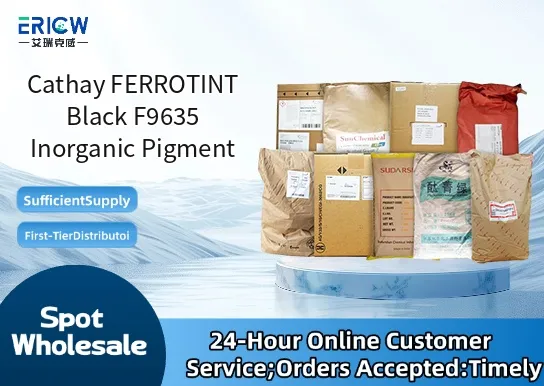
Highly stable iron oxide-based black pigment with excellent thermal and UV resistance.
Consistent particle size distribution ensuring uniform dispersion in demanding matrix systems.
Low soluble salt content, minimizing risk of corrosion in metal-coated applications.
Non-toxic and REACH-compliant, suitable for industrial coatings requiring regulatory safety assurance.
Optimized surface treatment for enhanced compatibility with acrylic, epoxy, and alkyd resin systems.
Automotive OEM and refinish coatings requiring durable, non-fading black shade.
Industrial maintenance paints for steel structures, pipelines, and offshore equipment.
Plastic coloration for engineering thermoplastics including ABS, PP, and PVC.
Architectural coatings including exterior masonry paints and textured wall finishes.
Cementitious products such as colored concrete, pavers, and roof tiles.
| Chemical Type | Iron oxide (Fe₃O₄ / γ-Fe₂O₃ blend) |
| Product Form | Free-flowing dry powder |
| Appearance | Jet-black granular powder |
| Primary Applications | Coatings, plastics, construction materials |
| Key Features | Heat stability up to 250°C, lightfastness ≥8 (DIN 53231), weather resistance grade 5 (ISO 11341) |
| Benefits | Low abrasivity, high tinting strength, minimal oil absorption (~18 g/100g) |
| Heavy Metals Compliance | Meets EU Directive 2009/48/EC (Toys) and EN 71-3 limits |
| Storage Conditions | Store in dry, cool, well-ventilated area; avoid moisture exposure |
Q1: What is the primary chemical composition of Cathay FERROTINT Black F9635?
A: Cathay FERROTINT Black F9635 is a high-performance inorganic black pigment based on a complex iron oxide–manganese oxide spinel structure, engineered for thermal stability and consistent color development in demanding industrial applications.
Q2: Is this pigment suitable for use in high-temperature polymer processing, such as engineering thermoplastics?
A: Yes — F9635 exhibits excellent thermal stability and is widely used in high-heat polymer systems including polyamide (PA), polybutylene terephthalate (PBT), and polyphenylene sulfide (PPS), where it maintains color integrity without blooming or degradation during melt processing.
Q3: How does F9635 compare to carbon black in terms of UV resistance and electrical properties?
A: Unlike carbon black, F9635 is non-conductive and does not impart electrical conductivity to the host matrix. It offers superior UV inertness and weatherfastness due to its fully inorganic nature, with no risk of photochemical fading or surface oxidation under prolonged exposure.
Q4: Can F9635 be dispersed in aqueous systems for coatings or inks?
A: Yes — while inherently hydrophobic, F9635 can be effectively dispersed in water-based formulations using appropriate surfactants or polymeric dispersants. Optimal dispersion typically requires high-shear mixing and may benefit from pH stabilization between 7.5 and 9.0.
Q5: What safety and handling precautions should be observed during industrial use?
A: As a fine inorganic powder, standard occupational hygiene practices apply: use local exhaust ventilation, wear NIOSH-approved particulate respirators (e.g., N95 or higher), and avoid generating airborne dust. The material is not classified as hazardous under GHS for acute toxicity, but eye and respiratory irritation may occur upon direct exposure.
Contact With Us:
E-mail: wangxingqiang@ericwchem.com
Have a Questions? Call Us:
Add:
Building A1, Jiete Industrial Park, Huangpu District, Guangzhou City, Guangdong Province, China