English
 Español
 tiếng việt
 русский
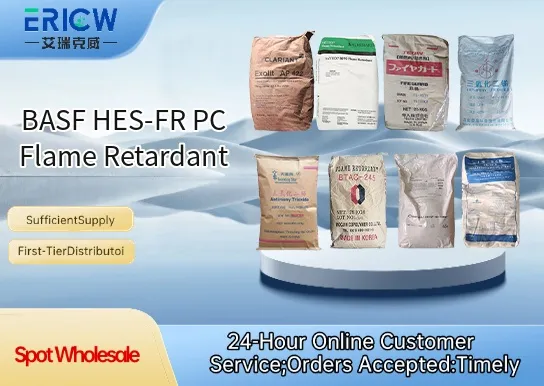
Halogen-free formulation ensuring low smoke density and reduced toxic gas emission during combustion.
Excellent thermal stability compatible with polycarbonate (PC) processing temperatures up to 320 °C.
High flame retardancy performance achieving UL94 V-0 rating at 1.5 mm thickness without compromising mechanical integrity.
Good melt flow behavior enabling efficient injection molding and thin-wall part production.
Enhanced UV stability for improved long-term color retention in outdoor applications.
Electrical enclosures and junction boxes for industrial control systems.
LED lighting housings and lens components requiring high transparency and fire safety compliance.
Public transportation interior parts including seat frames and signage panels.
Consumer electronics casings for power adapters, charging stations, and smart home devices.
| Chemical Type | Organophosphorus-based halogen-free flame retardant additive |
| Product Form | Pellets |
| Appearance | Off-white to light beige free-flowing pellets |
| Primary Applications | Flame-retardant modification of aromatic polycarbonate (PC) resins |
| Key Features | UL94 V-0 (1.5 mm), CTI ≥ 600 V, RoHS compliant |
| Benefits | Enables recyclability of PC compounds, supports EOL circularity goals |
| Processing Method | Compounding via twin-screw extrusion; suitable for standard PC drying protocols |
Q1: What is the primary mechanism of flame retardancy for HES-FR PC?
A: HES-FR PC functions primarily through a condensed-phase mechanism, promoting char formation on the polymer surface during thermal exposure. This thermally stable char layer acts as a physical barrier, reducing heat feedback and limiting mass transfer of flammable volatiles.
Q2: Is HES-FR PC compatible with standard polycarbonate processing methods?
A: Yes — HES-FR PC is specifically engineered for compatibility with conventional polycarbonate melt processing techniques, including injection molding and extrusion. It exhibits good thermal stability under typical PC processing temperatures and minimal impact on melt flow behavior when properly compounded.
Q3: How does HES-FR PC affect the mechanical properties of polycarbonate blends?
A: When incorporated at recommended dosages, HES-FR PC maintains a favorable balance between flame retardancy and mechanical performance. Impact strength, tensile modulus, and heat deflection temperature are generally well preserved compared to halogenated alternatives, though optimization of loading level and compounding conditions is advised to meet specific end-use requirements.
Q4: Can HES-FR PC be used in applications requiring regulatory compliance for food contact or medical devices?
A: HES-FR PC is not pre-approved for direct food contact or implantable medical applications. Its suitability for regulated uses depends on full formulation evaluation, final product testing, and compliance verification against applicable regional frameworks — users must conduct their own due diligence and obtain necessary authorizations.
Contact With Us:
E-mail: wangxingqiang@ericwchem.com
Have a Questions? Call Us:
Add:
Building A1, Jiete Industrial Park, Huangpu District, Guangzhou City, Guangdong Province, China