English
 Español
 tiếng việt
 русский
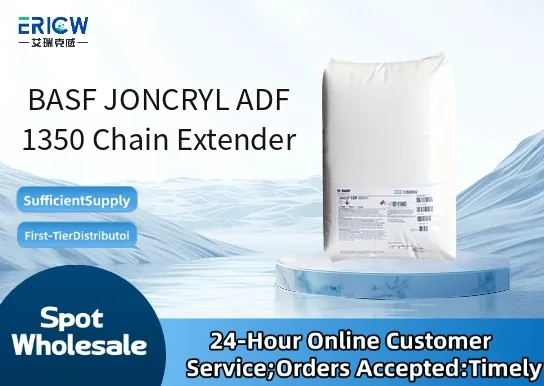
Highly efficient epoxy-functional chain extender for polyacrylate and polyester-based thermoplastic elastomers.
Enables precise molecular weight control and improved melt strength during extrusion and injection molding.
Low volatility and excellent thermal stability up to 220 °C, minimizing odor and degradation during processing.
Compatible with common reactive extrusion equipment and widely used in industrial compounding lines.
Supports enhanced mechanical properties—including tensile strength, elongation at break, and impact resistance—in final TPE compounds.
Thermoplastic elastomer (TPE) compounds for automotive interior trim and seals.
Soft-touch overmolding applications in consumer electronics and appliances.
Flexible packaging films requiring high toughness and seal integrity.
Medical-grade thermoplastic elastomers meeting ISO 10993-compatibility requirements.
Recycled polymer upcycling—improving melt rheology and mechanical performance of post-consumer PET/PA blends.
| Chemical Type | Epoxy-functional oligomer |
| Product Form | Pellets |
| Appearance | Off-white to light beige, free-flowing pellets |
| Primary Applications | Chain extension of acrylic- and polyester-based TPEs |
| Key Features | Reactive functionality, low dust generation, consistent batch-to-batch performance |
| Benefits | Improved processability, enhanced mechanical properties, compatibility with standard compounding equipment |
| Storage Conditions | Store in original sealed packaging at 15–25 °C; protect from moisture and direct sunlight |
| Handling Precautions | Use in well-ventilated areas; avoid inhalation of dust; refer to SDS for full safety guidance |
Q1: What is the primary function of JONCRYL ADF 1350 in acrylic dispersions?
A: JONCRYL ADF 1350 is a multifunctional chain extender designed to enhance molecular weight development and improve film integrity in aqueous acrylic dispersions—particularly during ambient or low-temperature drying conditions. It reacts with carboxyl and other functional groups to promote crosslinking and chain growth without requiring external catalysts.
Q2: Is JONCRYL ADF 1350 compatible with high-solids or low-VOC formulations?
A: Yes—it is specifically engineered for use in low-VOC and high-solids acrylic systems. Its water-dispersible nature supports formulation stability and minimizes viscosity increase prior to film formation, making it suitable for environmentally compliant coatings and adhesives.
Q3: How should JONCRYL ADF 1350 be incorporated into a dispersion?
A: It is typically added late in the manufacturing process—either during or after polymerization—as a post-additive. It can be introduced directly as received or pre-diluted in water or compatible co-solvents. Good agitation is recommended to ensure uniform distribution before final pH adjustment or thickener addition.
Q4: Does JONCRYL ADF 1350 affect the storage stability of acrylic dispersions?
A: When used within recommended dosage ranges, it generally maintains good shelf life without accelerating viscosity drift or coagulum formation. However, prolonged exposure to elevated temperatures or highly alkaline conditions prior to film formation may impact long-term stability—formulators are advised to conduct compatibility and stability testing under intended storage conditions.
Q5: Can JONCRYL ADF 1350 replace traditional crosslinkers like aziridines or carbodiimides?
A: It serves a distinct role as a chain extender rather than a full crosslinker—offering controlled molecular growth and improved toughness without the handling or regulatory constraints associated with highly reactive chemistries. While it may reduce dependency on stronger crosslinkers, optimal performance often involves complementary use depending on end-use requirements such as chemical resistance or block resistance.
Contact With Us:
E-mail: wangxingqiang@ericwchem.com
Have a Questions? Call Us:
Add:
Building A1, Jiete Industrial Park, Huangpu District, Guangzhou City, Guangdong Province, China