English
 Español
 tiếng việt
 русский
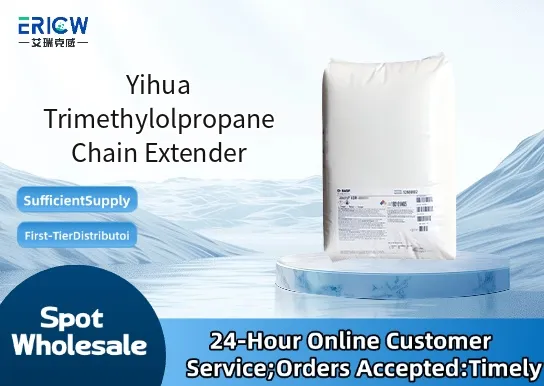
High-purity trimethylolpropane (TMP) base ensures consistent chain extension efficiency in polyurethane and polyester synthesis.
Low volatility and excellent thermal stability support safe handling and high-temperature processing up to 180 °C.
Triple hydroxyl functionality enables precise molecular weight control and enhanced crosslink density in elastomers and coatings.
Low moisture content (<0.1%) minimizes side reactions during prepolymer formation, improving batch reproducibility.
Non-toxic, REACH-compliant formulation suitable for industrial applications requiring stringent regulatory adherence.
Flexible and thermoplastic polyurethane (TPU) elastomers for automotive interior components.
High-performance polyurethane coatings for industrial flooring and protective marine finishes.
Castable polyurethane systems used in mining screens, rollers, and wear-resistant parts.
Polyester-based adhesives and sealants requiring elevated tensile strength and chemical resistance.
Waterborne polyurethane dispersions (PUDs) for eco-friendly textile and leather finishing.
| Chemical Type | Trimethylolpropane (C6H14O3) |
| Product Form | White crystalline solid |
| Appearance | Free-flowing granules or powder |
| Hydroxyl Value (mg KOH/g) | 765–785 |
| Melting Point (°C) | 56–58 |
| Moisture Content (wt%) | ≤0.10 |
| Acid Number (mg KOH/g) | ≤0.5 |
| Assay (GC, wt%) | ≥99.5 |
Q1: What is the primary function of Yihua Trimethylolpropane Chain Extender in polyurethane systems?
A: It serves as a trifunctional chain extender that enhances crosslink density, improves mechanical strength, and contributes to better thermal stability and chemical resistance in thermoset polyurethanes and elastomers.
Q2: How does this chain extender differ from conventional diamine or diol extenders?
A: Unlike linear diamines or diols, trimethylolpropane-based extenders introduce branching and additional hydroxyl functionality, enabling higher crosslinking potential and improved dimensional stability—particularly beneficial in cast elastomers and rigid foam formulations.
Q3: Is Yihua Trimethylolpropane Chain Extender compatible with aromatic and aliphatic isocyanates?
A: Yes, it demonstrates broad compatibility with both aromatic (e.g., MDI, TDI) and aliphatic (e.g., HDI, IPDI) isocyanates, making it suitable for applications requiring UV stability or tailored reactivity profiles.
Q4: What handling precautions should be observed during storage and processing?
A: Store in a cool, dry place under inert atmosphere if possible; protect from moisture and prolonged exposure to elevated temperatures. Due to its polyol nature, it may absorb ambient humidity—ensure containers are tightly sealed between uses.
Q5: How is dosage typically determined in formulation development?
A: Dosage depends on formulation requirements and target performance attributes, but it is generally used at low concentrations—typically ranging from 0.1% to 2% by weight relative to total polyol solids—to balance reactivity, processability, and final physical properties.
Contact With Us:
E-mail: wangxingqiang@ericwchem.com
Have a Questions? Call Us:
Add:
Building A1, Jiete Industrial Park, Huangpu District, Guangzhou City, Guangdong Province, China