English
 Español
 tiếng việt
 русский
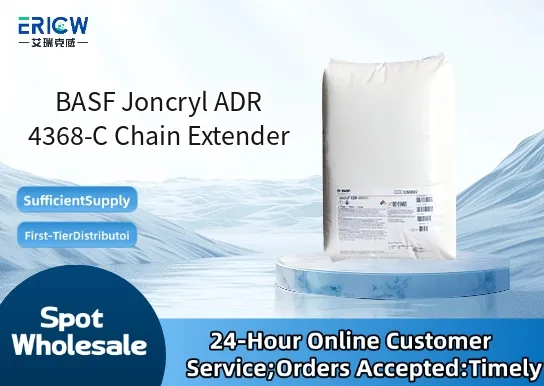
Highly efficient multi-functional epoxy-based chain extender for thermoplastic polyurethanes (TPU) and polyesters.
Enables precise molecular weight control and improved melt strength during extrusion and injection molding.
Enhances mechanical properties—including tensile strength, elongation at break, and tear resistance—without compromising processability.
Compatible with a broad range of polyols and isocyanates; supports low-temperature processing windows.
Non-volatile, low-dust powder form ensures safe handling and consistent dosing in industrial compounding lines.
Reinforcement of thermoplastic polyurethane (TPU) compounds for automotive interior trim and seals.
Performance enhancement of polyester-based engineering plastics used in consumer electronics housings.
Molecular weight stabilization in recycled PET and PBT blends for sustainable packaging applications.
Chain extension in biodegradable aliphatic polyesters (e.g., PBAT, PLA) for flexible film and fiber production.
| Chemical Type | Multi-functional epoxy resin |
| Product Form | Free-flowing white to off-white powder |
| Appearance | Free-flowing crystalline powder |
| Primary Applications | TPU, polyester, and biopolymer chain extension |
| Key Features | Thermal stability up to 220 °C; low volatility; high reactivity with hydroxyl and carboxyl groups |
| Benefits | Improved melt viscosity, enhanced mechanical performance, compatibility with standard compounding equipment |
| Storage Conditions | Store in original sealed container at 15–25 °C, protect from moisture |
Q1: What is the primary function of Joncryl ADR 4368-C in acrylic and polyester resin systems?
A: Joncryl ADR 4368-C is a multifunctional epoxy-functional chain extender designed to increase molecular weight, improve melt viscosity, and enhance mechanical properties—such as toughness and film integrity—in thermoplastic acrylic and polyester resins, particularly during extrusion or compounding.
Q2: How does Joncryl ADR 4368-C differ from conventional chain extenders like diols or diamines?
A: Unlike stoichiometric diol- or amine-based extenders, ADR 4368-C reacts selectively with carboxyl and hydroxyl end groups via its epoxy functionality, enabling controlled, non-stoichiometric chain extension without generating volatile byproducts or requiring precise molar balancing—offering greater processing flexibility and reduced risk of gelation.
Q3: Is Joncryl ADR 4368-C suitable for use in food-contact or sensitive coating applications?
A: While not inherently restricted, suitability for food-contact or regulated applications depends on final formulation compliance—including full migration assessment, regulatory clearance of all components, and end-use conditions. Users must validate performance and compliance through their own testing and regulatory review.
Q4: What processing conditions are recommended for optimal incorporation of ADR 4368-C?
A: Best results are typically achieved when ADR 4368-C is added during high-shear melt compounding—such as twin-screw extrusion—at temperatures between 160 °C and 220 °C. Uniform dispersion prior to onset of reaction is critical; residence time and mixing intensity should be optimized to ensure complete functionalization without thermal degradation.
Q5: Can Joncryl ADR 4368-C be used in combination with other additives such as impact modifiers or stabilizers?
A: Yes—ADR 4368-C is generally compatible with common polymer additives including UV stabilizers, antioxidants, and acrylic impact modifiers. However, interactions with highly acidic or strongly nucleophilic additives should be evaluated empirically, as they may influence epoxy reactivity or dispersion stability.
Contact With Us:
E-mail: wangxingqiang@ericwchem.com
Have a Questions? Call Us:
Add:
Building A1, Jiete Industrial Park, Huangpu District, Guangzhou City, Guangdong Province, China