English
 Español
 tiếng việt
 русский
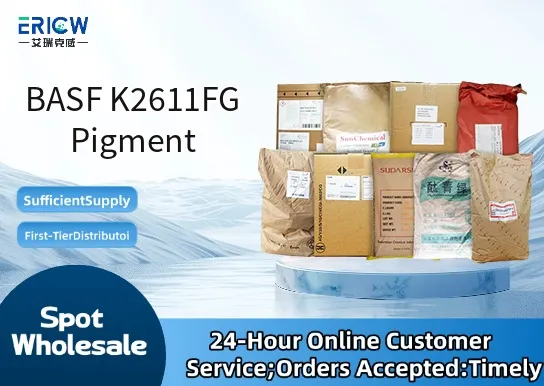
High chroma and excellent color strength for vibrant, consistent tinting performance.
Outstanding thermal stability suitable for high-temperature processing up to 280 °C.
Good dispersibility in both polar and non-polar polymer matrices without requiring additional dispersants.
Excellent lightfastness and weather resistance, meeting ISO 105-B02 and ISO 4892-2 requirements.
Compliant with major global regulatory frameworks including REACH, RoHS, and FDA 21 CFR §178.3297 for indirect food contact applications.
Automotive interior and exterior plastic components (e.g., dashboards, trim, bumpers).
Polypropylene (PP) and polyethylene (PE) packaging films requiring UV-stable coloration.
Engineering plastics such as ABS, PC/ABS, and PBT used in consumer electronics housings.
Masterbatch formulations for injection molding and extrusion processes.
Industrial coatings and powder coatings where high-gloss finish and long-term color retention are critical.
| Chemical Type | High-performance organic pigment (Benzimidazolone derivative) |
| Product Form | Free-flowing granular powder |
| Appearance | Reddish-orange free-flowing granules |
| Primary Applications | Polyolefins, engineering plastics, masterbatches, and industrial coatings |
| Key Features | Thermal stability, dispersion efficiency, lightfastness, regulatory compliance |
| Particle Size (D50) | Approx. 0.15–0.25 µm (by laser diffraction) |
| Volatile Matter (105 °C, 2 h) | ≤ 0.5 wt% |
| Heavy Metals (Pb, Cd, Hg, Cr⁶⁺) | Below detection limit per EN 71-3 and ASTM F963 |
Q1: What is the primary application field for BASF K2611FG Pigment?
A: BASF K2611FG Pigment is specifically developed for use in high-performance industrial coatings and plastic applications where excellent heat stability, lightfastness, and dispersion consistency are required — particularly in automotive OEM and refinish systems, as well as engineering thermoplastics.
Q2: Is K2611FG suitable for food-contact plastics?
A: K2611FG is not pre-qualified for direct food-contact applications. Its suitability depends on final formulation, processing conditions, and regulatory review by the end-user — it should only be used in food-contact systems after full compliance assessment against applicable regional regulations.
Q3: How does K2611FG perform under high-temperature processing conditions?
A: K2611FG exhibits good thermal stability and is designed to withstand typical plastic processing temperatures up to approximately 280 °C without significant color shift or degradation — making it appropriate for injection molding and extrusion of engineering polymers.
Q4: What is the recommended method for incorporating K2611FG into polymer systems?
A: For optimal dispersion, K2611FG is typically introduced via masterbatch preparation using standard compounding equipment. Direct addition may require extended mixing time and optimized shear conditions to achieve uniform distribution and full color development.
Q5: Does K2611FG contain heavy metals or restricted substances?
A: K2611FG is formulated without intentionally added lead, mercury, cadmium, or hexavalent chromium, and complies with BASF’s internal Restricted Substances List (RSL). However, users must verify conformance with their specific regulatory and customer requirements, especially for global markets.
Contact With Us:
E-mail: wangxingqiang@ericwchem.com
Have a Questions? Call Us:
Add:
Building A1, Jiete Industrial Park, Huangpu District, Guangzhou City, Guangdong Province, China