English
 Español
 tiếng việt
 русский
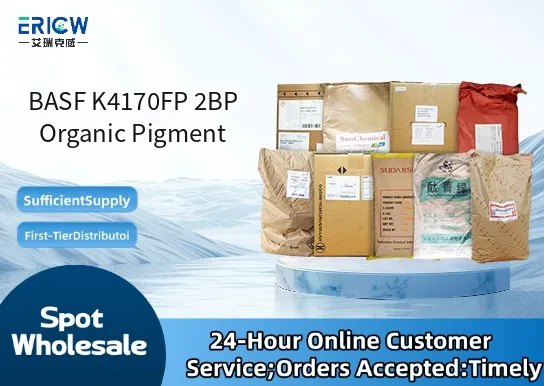
High chroma and excellent color strength in demanding pigmentary applications.
Outstanding thermal stability up to 280 °C, suitable for high-temperature processing.
Good lightfastness and weather resistance under accelerated testing conditions.
Excellent dispersibility in both polar and non-polar polymer matrices.
Low migration tendency in PVC, polyolefins, and engineering plastics.
Coloration of rigid and flexible PVC compounds.
Pigmentation of polypropylene (PP) and polyethylene (PE) fibers and injection-molded parts.
Masterbatch formulation for automotive interior plastics.
High-performance coloring of polycarbonate (PC) and ABS for exterior applications.
Specialty inks for packaging films requiring FDA-compliant pigments.
| Chemical Type | Benzimidazolone derivative |
| Product Form | Free-flowing powder |
| Appearance | Reddish-brown to dark maroon powder |
| Primary Applications | PVC, polyolefins, engineering thermoplastics |
| Key Features | Thermal stability, low volatility, high tinctorial strength |
| Benefits | Consistent batch-to-batch performance, low dust generation |
| Regulatory Compliance | EU REACH registered; compliant with FDA 21 CFR §178.3297 (for polymers) |
| Recommended Processing Temperature Range | 180–280 °C |
Q1: What is the primary chemical class and typical application focus of K4170FP 2BP?
A: K4170FP 2BP is a high-performance benzimidazolone-based organic pigment, engineered for demanding industrial coating and plastic applications where excellent heat stability, lightfastness, and weather resistance are required—particularly in automotive topcoats, engineering thermoplastics, and premium powder coatings.
Q2: Is K4170FP 2BP suitable for food-contact plastics or packaging inks?
A: This grade is not certified for direct food contact applications. It is formulated for non-regulated industrial uses; customers requiring food-safe pigments must select BASF’s dedicated food-contact compliant portfolio and verify suitability with local regulatory guidance and end-use testing.
Q3: How does K4170FP 2BP compare to standard benzimidazolone pigments in terms of dispersibility and rheology impact?
A: K4170FP 2BP features a surface-treated particle morphology optimized for enhanced wetting and reduced agglomeration in both solvent-borne and high-solids systems. It typically delivers lower viscosity buildup and improved stabilization in complex resin blends compared to untreated analogues, especially in acrylic and polyester-based formulations.
Q4: What are the recommended processing conditions for incorporating K4170FP 2BP into thermoplastic compounds?
A: For optimal dispersion and minimal thermal degradation, processing temperatures should remain within the stable range of the host polymer—generally below 280 °C for polyolefins and below 300 °C for engineering resins like PA6 or PBT. Twin-screw extrusion with moderate shear and sufficient residence time is preferred; dosage depends on formulation requirements but typically ranges from 0.1% to 2% by weight.
Contact With Us:
E-mail: wangxingqiang@ericwchem.com
Have a Questions? Call Us:
Add:
Building A1, Jiete Industrial Park, Huangpu District, Guangzhou City, Guangdong Province, China