English
 Español
 tiếng việt
 русский
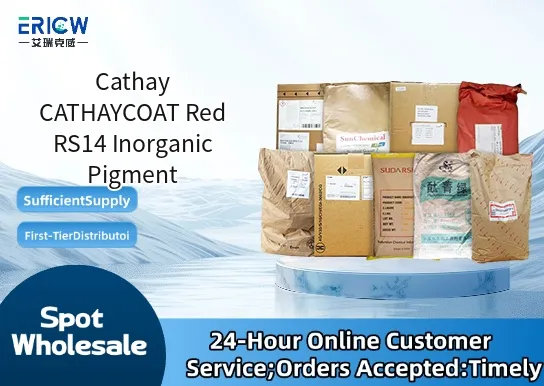
High thermal stability up to 800 °C, suitable for high-temperature ceramic and enamel applications.
Excellent chemical resistance against acids, alkalis, and solvents in demanding industrial environments.
Consistent batch-to-batch color reproducibility with low chromatic variation (ΔE < 0.8).
Non-toxic and heavy-metal-free formulation compliant with global regulatory standards including EN 71-3 and RoHS.
Optimized particle size distribution for enhanced dispersion stability in aqueous and solvent-based systems.
Ceramic glazes and underglaze decorations for tableware and architectural tiles.
High-performance vitreous enamels for domestic appliances and industrial heat exchangers.
Colorants in refractory coatings and fireproofing materials.
Pigmentation of inorganic binders in construction mortars and façade renders.
Stable red hue in glass frits and low-melting-point specialty glasses.
| Chemical Type | Mixed metal oxide (Fe–Cr–Al spinel) |
| Product Form | Fine dry powder |
| Appearance | Free-flowing maroon-red powder |
| Primary Applications | Ceramics, vitreous enamels, refractories, glass frits |
| Key Features | Thermal stability, acid/alkali resistance, non-volatile, UV inert |
| Benefits | No color shift during firing, minimal binder interaction, low dust generation |
| Storage Conditions | Store in cool, dry, well-ventilated area; protect from moisture and direct sunlight |
| Shelf Life | 36 months from date of manufacture under recommended storage conditions |
Q1: What is the primary chemical composition of Cathay CATHAYCOAT Red RS14?
A: Cathay CATHAYCOAT Red RS14 is a high-performance inorganic red pigment based on a modified iron oxide–chromium oxide composite system, engineered for enhanced thermal stability and color consistency in demanding industrial applications.
Q2: Is this pigment suitable for use in high-temperature coating systems, such as coil coatings or powder coatings?
A: Yes — RS14 is specifically formulated to retain its chromatic integrity and dispersion stability at processing temperatures up to 250 °C, making it well-suited for coil coatings, architectural powder coatings, and other thermally demanding organic binder systems.
Q3: How does RS14 compare to conventional iron oxide red pigments in terms of tinting strength and weather resistance?
A: RS14 delivers significantly higher tinting strength and improved UV resistance compared to standard hematite-based reds, owing to its controlled particle morphology and surface treatment — resulting in better long-term gloss retention and reduced chalking in exterior-exposed coatings.
Q4: Can RS14 be used in waterborne systems without compromising dispersion or stability?
A: Yes — RS14 is compatible with both solvent-borne and waterborne architectures. Its optimized surface chemistry supports stable dispersion in acrylic, polyurethane, and epoxy dispersions, though formulation-specific dispersant selection and pH control are recommended for optimal performance.
Q5: What is the typical dosage range for RS14 in industrial coating formulations?
A: Dosage depends on the required opacity, hue intensity, and binder system, but RS14 is generally used at low concentrations — typically ranging from 0.1% to 2% by weight relative to total formulation solids — due to its high intrinsic color strength and hiding power.
Contact With Us:
E-mail: wangxingqiang@ericwchem.com
Have a Questions? Call Us:
Add:
Building A1, Jiete Industrial Park, Huangpu District, Guangzhou City, Guangdong Province, China