English
 Español
 tiếng việt
 русский
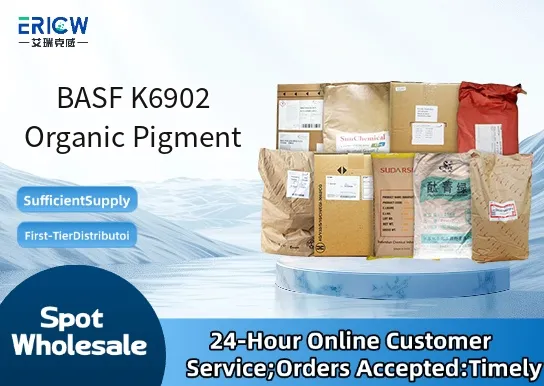
High chroma and excellent color strength for vibrant, consistent hue reproduction.
Outstanding thermal stability suitable for high-temperature processing up to 280 °C.
Good lightfastness and weather resistance in demanding outdoor applications.
Excellent dispersibility in both polar and non-polar polymer systems.
Low volatility and minimal migration in PVC, polyolefins, and engineering plastics.
Automotive interior and exterior plastic components.
Household appliances with colored thermoplastic housings.
Industrial coatings requiring long-term color retention.
Polypropylene (PP) and polyethylene (PE) packaging films.
Engineering plastics such as ABS and polycarbonate blends.
| Chemical Type | Quinacridone derivative |
| Product Form | Fine free-flowing powder |
| Appearance | Red-violet crystalline powder |
| Primary Applications | Plastics, coatings, and high-performance inks |
| Key Features | Thermally stable, low-migration, high-tinting strength |
| Benefits | Color consistency across processing batches and extended service life |
| Recommended Carrier | Polyethylene wax or EVA-based masterbatch |
| Storage Conditions | Keep in cool, dry place; protect from direct sunlight and moisture |
Q1: What is the primary chemical class and typical hue profile of BASF K6902?
A: BASF K6902 is a high-performance quinacridone-based organic pigment, offering strong violet-red to bluish-red shades with excellent chroma and clean undertones. Its molecular structure provides inherent resistance to thermal degradation and light exposure.
Q2: Is BASF K6902 suitable for use in food-contact plastics?
A: BASF K6902 is not specifically designed or certified for direct food-contact applications. It may be considered for indirect contact or non-migrating systems where regulatory compliance is confirmed by the compounder or end-user through full migration testing and applicable local legislation review.
Q3: How does BASF K6902 perform under high-temperature processing conditions?
A: This pigment demonstrates good thermal stability, typically retaining color integrity during standard polyolefin and engineering plastic processing up to approximately 280–300 °C. Performance may vary depending on residence time, shear history, and polymer matrix—pre-dispersion or masterbatch incorporation is recommended for optimal stability.
Q4: What are common dispersion methods for achieving optimal color development with BASF K6902?
A: For best results, BASF K6902 should be introduced as a pre-dispersed masterbatch or via high-shear compounding in the base polymer. Dry blending alone is generally insufficient due to its low specific gravity and high surface area; wet-grinding or solvent-assisted dispersion may be used in liquid systems such as inks or coatings.
Q5: Can BASF K6902 be used alongside other organic pigments or inorganic colorants without compatibility concerns?
A: BASF K6902 exhibits broad compatibility with most common organic pigments and selected inorganic colorants in polymeric systems. However, interactions—especially with strongly acidic or alkaline additives, certain flame retardants, or copper-based stabilizers—may affect hue or stability; compatibility testing in the final formulation is strongly advised.
Contact With Us:
E-mail: wangxingqiang@ericwchem.com
Have a Questions? Call Us:
Add:
Building A1, Jiete Industrial Park, Huangpu District, Guangzhou City, Guangdong Province, China