English
 Español
 tiếng việt
 русский
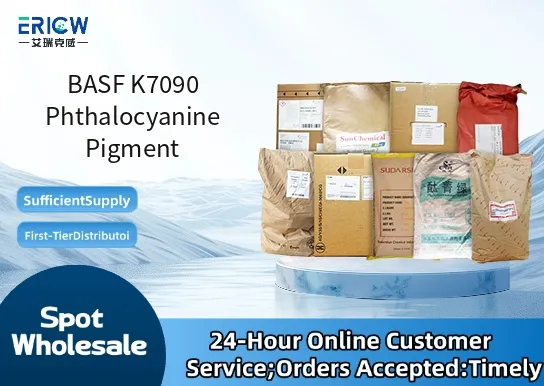
High chroma and excellent lightfastness (ISO 105-B02, Grade 7–8)
Outstanding thermal stability up to 220 °C in polymer processing
Superior dispersibility in organic solvents and polar resin systems
Excellent chemical resistance to acids, alkalis, and common industrial solvents
Low volatile organic compound (VOC) contribution and REACH-compliant
Automotive coatings (basecoat and clearcoat systems)
Engineering plastics (e.g., polyamide, ABS, and polycarbonate)
Industrial coil coatings and metal decorating inks
High-performance printing inks for packaging and labels
Architectural and protective coatings requiring long-term weatherability
| Chemical Type | Copper phthalocyanine (CuPc), beta-phase |
| Product Form | Free-flowing powder |
| Appearance | Intense greenish-blue crystalline pigment |
| Primary Applications | Coatings, plastics, inks |
| Key Features | High tinctorial strength, low migration, non-bleeding |
| Benefits | Consistent batch-to-batch color match, low dust generation |
| Regulatory Status | EU REACH registered; compliant with FDA 21 CFR §178.3297 (for indirect food contact) |
| Storage Conditions | Store in cool, dry place; avoid prolonged exposure to humidity and direct sunlight |
Q1: What is the primary chemical composition and pigment class of BASF K7090?
A: BASF K7090 is a high-performance copper phthalocyanine-based pigment, belonging to the phthalocyanine blue pigment family. It features a robust, fused aromatic macrocyclic structure with copper as the central metal ion, delivering excellent chromatic strength and intrinsic stability.
Q2: Is BASF K7090 suitable for use in food-contact plastics or packaging applications?
A: BASF K7090 is not specifically designed or certified for direct food-contact applications. While it exhibits good regulatory compliance in certain industrial segments, formulators must conduct full regulatory due diligence—including migration testing and compliance verification with applicable regional frameworks—before considering use in food-contact materials.
Q3: How does BASF K7090 perform under thermal processing conditions typical for polyolefins or engineering plastics?
A: BASF K7090 demonstrates very good thermal stability and is well-suited for standard melt-processing temperatures encountered in polyolefin compounding and injection molding. It maintains color integrity and shows minimal degradation up to approximately 280 °C, though optimal performance depends on residence time, shear history, and polymer matrix compatibility.
Q4: What are the recommended dispersion methods for achieving optimal color development and stability in masterbatches?
A: For best results, BASF K7090 should be dispersed using high-shear compounding techniques—such as twin-screw extrusion—with appropriate dispersing aids and carrier resins. Pre-wetting and controlled feed rates help ensure uniform distribution and minimize agglomeration, especially in high-concentration masterbatches.
Q5: Can BASF K7090 be used in combination with other organic pigments or effect pigments without adverse interaction?
A: Yes, BASF K7090 is generally compatible with many common organic pigments and metallic effect pigments when properly stabilized. However, interactions—such as flocculation or hue shift—may occur depending on surface chemistry and formulation pH. Compatibility screening under intended processing and end-use conditions is strongly recommended.
Contact With Us:
E-mail: wangxingqiang@ericwchem.com
Have a Questions? Call Us:
Add:
Building A1, Jiete Industrial Park, Huangpu District, Guangzhou City, Guangdong Province, China