English
 Español
 tiếng việt
 русский
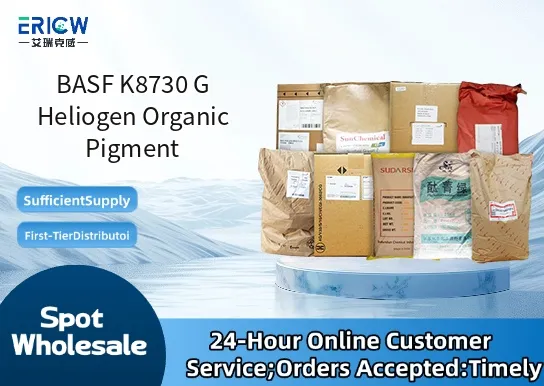
High chroma and clean blue shade with excellent lightfastness (ISO 105-B02: ≥7)
Outstanding heat stability up to 220 °C for demanding polymer processing
Excellent dispersibility in both polar and non-polar media, including polyolefins and engineering plastics
Low migration behavior compliant with global food-contact regulations (EU 10/2011, FDA 21 CFR §178.3297)
Consistent batch-to-batch color reproducibility supported by BASF’s certified quality control system
Polypropylene (PP) and polyethylene (PE) packaging films
Automotive interior trim and exterior plastic components
Household appliances and consumer electronics housings
Masterbatch production for high-performance color concentrates
Industrial coatings requiring weather resistance and color fidelity
| Chemical Type | Heliogen Blue K8730 G (C.I. Pigment Blue 15:3) |
| Product Form | Free-flowing granular pigment |
| Appearance | Blue granules, free of visible specks or agglomerates |
| Primary Applications | Polyolefins, engineering thermoplastics, masterbatches |
| Key Features | High tinctorial strength, low dusting, excellent thermal stability |
| Benefits | Reduced dosage requirements, improved processability, compliance with food-contact standards |
| Storage Conditions | Store in dry, cool, well-ventilated area; protect from moisture and direct sunlight |
| Shelf Life | 36 months from date of manufacture under recommended storage |
Q1: What is the primary chemical class and hue characteristic of K8730 G?
A: BASF K8730 G is a high-performance perylene-based organic pigment, offering a clean, bluish-red shade with excellent chroma and strong tinting strength. It belongs to the Heliogen® family, engineered for superior lightfastness and thermal stability in demanding applications.
Q2: Is K8730 G suitable for use in automotive coatings or plastic coloration?
A: Yes — K8730 G is widely used in engineering plastics (e.g., polyolefins, polyesters) and high-end automotive topcoats due to its outstanding resistance to heat, light, and weathering. Its dispersion stability supports consistent color development across extrusion and injection molding processes.
Q3: How should K8730 G be dispersed for optimal performance?
A: Optimal dispersion requires high-shear processing — such as bead milling or three-roll grinding — in compatible resin systems. Pre-dispersed pastes or masterbatches are recommended for reproducible results, especially in sensitive applications like thin-film coatings or transparent plastics.
Q4: Does K8730 G contain heavy metals or halogens?
A: No — K8730 G is a halogen-free, heavy-metal-free organic pigment, compliant with global regulatory expectations for sustainable pigmentation, including RoHS and REACH requirements for restricted substances.
Q5: What is the typical dosage range when using K8730 G in polymer systems?
A: Dosage depends on formulation requirements and desired opacity or transparency, but it is typically used at low concentrations — generally ranging from 0.1% to 2% by weight — due to its high tinctorial strength and efficient color development.
Contact With Us:
E-mail: wangxingqiang@ericwchem.com
Have a Questions? Call Us:
Add:
Building A1, Jiete Industrial Park, Huangpu District, Guangzhou City, Guangdong Province, China