English
 Español
 tiếng việt
 русский
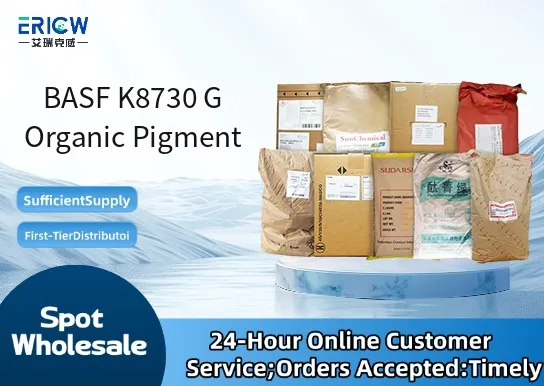
High chroma and excellent color strength in solvent-based and water-based systems.
Outstanding lightfastness and weather resistance, suitable for demanding outdoor applications.
Good thermal stability up to 220 °C, enabling use in high-temperature processing such as polymer compounding.
Excellent dispersibility in common organic media, facilitating efficient pigment preparation and low grinding energy consumption.
Low tendency to flocculate, ensuring long-term storage stability in liquid inks and coatings.
Automotive basecoat and clearcoat systems.
Industrial coil and can coatings.
Plastic coloring for polyolefins and engineering plastics.
High-performance gravure and flexographic printing inks.
Architectural and protective coatings requiring UV durability.
| Chemical Type | Quinacridone derivative |
| Product Form | Free-flowing powder |
| Appearance | Reddish violet fine powder |
| Primary Applications | Coatings, plastics, inks |
| Key Features | High transparency, excellent lightfastness (ISO 105-B02: 7–8), good migration resistance |
| Benefits | Consistent batch-to-batch color performance, low volatile organic content (VOC-free) |
| Density (g/cm³) | 1.45–1.55 |
| pH Value (5% aqueous suspension) | 5.5–7.5 |
Q1: What is the primary chemical class and typical hue of BASF K8730 G?
A: BASF K8730 G is a high-performance quinacridone-based organic pigment, offering a clean, bluish-red shade with excellent chroma and strong tinting strength. Its molecular structure provides inherent resistance to thermal degradation and light exposure.
Q2: Is K8730 G suitable for use in food-contact plastics?
A: K8730 G is not certified for direct food-contact applications under major global regulatory frameworks. It may be considered for non-migrating, indirect food-contact uses—such as external packaging layers—where formulation design ensures negligible pigment migration. Regulatory compliance must be verified case by case with final application testing.
Q3: How does K8730 G perform in high-temperature polymer processing?
A: This pigment demonstrates good thermal stability, typically supporting processing temperatures up to 280–300 °C in polyolefins and engineering thermoplastics. Performance remains robust under standard injection molding and extrusion conditions, though extended residence times at peak temperature may affect dispersion efficiency and color consistency.
Q4: What are recommended dispersion methods for optimal color development?
A: For best results, pre-dispersed masterbatches or melt-compounding with high-shear equipment are strongly recommended. Dry blending alone is insufficient due to the pigment’s low specific gravity and high surface area. Compatible carrier resins include LDPE, PP, and EVA; dispersion aids may further enhance uniformity and reduce agglomeration.
Contact With Us:
E-mail: wangxingqiang@ericwchem.com
Have a Questions? Call Us:
Add:
Building A1, Jiete Industrial Park, Huangpu District, Guangzhou City, Guangdong Province, China