English
 Español
 tiếng việt
 русский
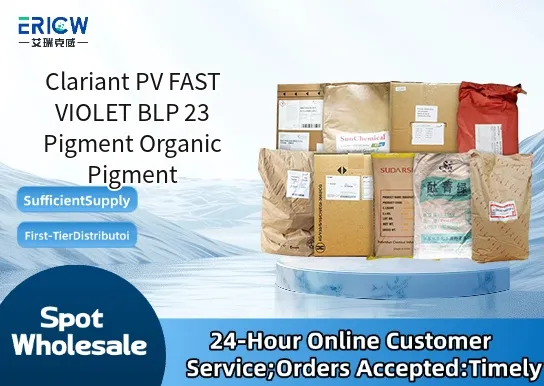
High chroma violet shade with excellent bluish undertone for vibrant color reproduction.
Outstanding lightfastness and weather resistance, suitable for demanding outdoor applications.
Good thermal stability up to 220 °C, enabling compatibility with high-temperature processing.
Excellent dispersibility in both solvent-based and water-based systems.
Low migration and bleeding tendency in polymer matrices, ensuring color integrity over time.
Automotive coatings (OEM and refinish).
Industrial coil and can coatings.
Engineering plastics including polyolefins and ABS.
High-performance inks for packaging and security printing.
Architectural and façade paints requiring long-term color retention.
| Chemical Type | Quinacridone derivative |
| Product Form | Free-flowing powder |
| Appearance | Violet to reddish-violet powder |
| Primary Applications | Coatings, plastics, inks |
| Key Features | High tinctorial strength, good opacity, low oil absorption |
| Benefits | Consistent batch-to-batch performance, REACH compliant, no restricted aromatic amines |
| Regulatory Status | EU REACH registered; compliant with FDA 21 CFR §178.3297 for indirect food contact applications |
| Storage Conditions | Store in cool, dry place below 30 °C; protect from moisture and direct sunlight |
Q1: What are the key performance characteristics of PV FAST VIOLET BLP 23?
A: PV FAST VIOLET BLP 23 is a high-strength, thermally stable organic pigment offering excellent lightfastness and weather resistance. It demonstrates good dispersibility in common polymer systems and maintains strong violet hue intensity even under processing conditions typical for plastics and coatings.
Q2: Is this pigment suitable for use in food-contact plastics?
A: PV FAST VIOLET BLP 23 is not pre-approved for direct food-contact applications under major global regulatory frameworks. Its suitability for such uses depends on final formulation, processing conditions, and compliance verification by the end-user or compounder against applicable regional regulations.
Q3: How does PV FAST VIOLET BLP 23 compare to other violet pigments in terms of heat stability?
A: This pigment exhibits enhanced thermal stability relative to many conventional quinacridone-based violets, supporting processing in engineering thermoplastics such as polyesters and polyamides without significant hue shift or strength loss.
Q4: What types of dispersion media or carriers are recommended for optimal performance?
A: For masterbatch production, PV FAST VIOLET BLP 23 performs well with standard polyolefin or polyester carriers. In liquid systems, it is commonly dispersed using non-ionic surfactants and aromatic or aliphatic solvents—formulation optimization is recommended to achieve target rheology and color development.
Contact With Us:
E-mail: wangxingqiang@ericwchem.com
Have a Questions? Call Us:
Add:
Building A1, Jiete Industrial Park, Huangpu District, Guangzhou City, Guangdong Province, China