English
 Español
 tiếng việt
 русский
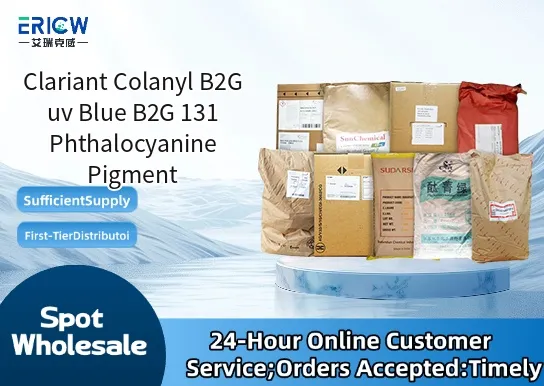
High chroma, clean ultramarine-blue shade with excellent UV stability.
Outstanding lightfastness and weather resistance for demanding outdoor applications.
Excellent heat stability up to 220 °C, suitable for high-temperature processing.
Good dispersibility in both solvent-based and water-based systems.
Low volatile organic compound (VOC) content, supporting sustainable formulation goals.
Automotive coatings including basecoats and clearcoat-tinted systems.
Industrial maintenance coatings for infrastructure and machinery.
Plastic coloration for polyolefins, PVC, and engineering thermoplastics.
High-performance inks for packaging and decorative printing.
Architectural coatings requiring long-term color retention and gloss stability.
| Chemical Type | Copper phthalocyanine derivative (chlorinated) |
| Product Form | Free-flowing powder |
| Appearance | Deep blue-violet granular powder |
| Primary Applications | Coatings, plastics, inks |
| Key Features | UV-stable, heat-resistant, high tinctorial strength |
| Benefits | Color consistency, low migration, regulatory compliance (EU REACH, FDA indirect food contact compliant) |
| Particle Size (D50) | Approx. 0.08–0.12 µm |
| Specific Surface Area | 65–75 m²/g |
Q1: What is the primary application advantage of Colanyl B2G uv Blue B2G 131 in UV-curable systems?
A: This pigment is specifically engineered for excellent dispersion stability and minimal reactivity in UV-curable inks and coatings, offering high color strength and outstanding lightfastness without interfering with photoinitiator efficiency or cure speed.
Q2: Is Colanyl B2G uv Blue B2G 131 suitable for food-contact applications?
A: While this grade is not pre-approved for direct food contact, it may be considered for indirect food packaging applications where regulatory compliance is verified per regional requirements and migration testing is conducted on the final formulation.
Q3: How does this pigment compare to standard copper phthalocyanine blues in terms of UV resistance?
A: Colanyl B2G uv Blue B2G 131 features enhanced molecular stabilization against UV degradation, delivering significantly improved long-term color retention in outdoor-exposed UV-cured films compared to conventional phthalocyanine pigments.
Q4: What are the recommended dispersion methods for optimal performance in low-viscosity UV inks?
A: High-shear dispersing with appropriate wetting agents—such as polymeric dispersants compatible with acrylate resins—is recommended. Ball milling or three-roll grinding may be used depending on ink viscosity targets and particle size requirements.
Contact With Us:
E-mail: wangxingqiang@ericwchem.com
Have a Questions? Call Us:
Add:
Building A1, Jiete Industrial Park, Huangpu District, Guangzhou City, Guangdong Province, China