English
 Español
 tiếng việt
 русский
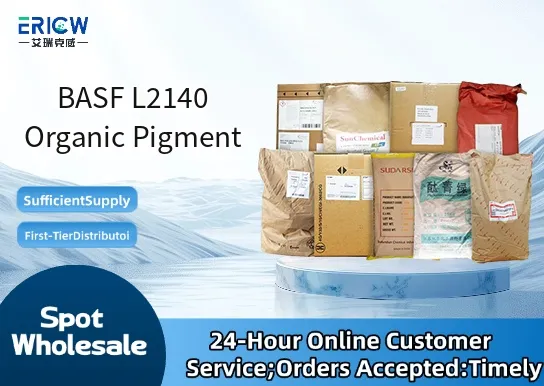
High chromatic strength with excellent color purity in red-shade hues.
Outstanding thermal stability up to 280 °C, suitable for high-temperature processing.
Good lightfastness and weather resistance under accelerated UV exposure.
Excellent dispersibility in both polar and non-polar polymer matrices.
Low volatility and minimal extractables, meeting stringent regulatory requirements for plastics and coatings.
Automotive interior and exterior plastic components (PP, ABS, PC).
Engineering thermoplastics for consumer electronics housings.
High-performance industrial coatings requiring color consistency and durability.
Packaging films where food-contact compliance and migration control are critical.
Masterbatch formulations for fiber and film extrusion processes.
| Chemical Type | Quinacridone derivative |
| Product Form | Free-flowing powder |
| Appearance | Reddish-violet fine powder |
| Primary Applications | Plastics, coatings, and masterbatches |
| Key Features | Thermal stability, dispersibility, lightfastness |
| Regulatory Status | Compliant with EU REACH; non-GMO, no heavy metals |
| Particle Size (D50) | 0.12–0.18 µm (by laser diffraction) |
| Specific Surface Area | 45–55 m²/g (BET method) |
Q1: What is the primary chemical class and typical hue profile of BASF L2140?
A: BASF L2140 is a high-performance perylene-based organic pigment, known for its strong, clean red-violet shade with excellent chroma and depth. It exhibits inherent resistance to thermal degradation and offers good lightfastness and weathering stability in demanding applications.
Q2: Is BASF L2140 suitable for use in food-contact plastics or regulated packaging applications?
A: BASF L2140 is not specifically designed or certified for direct food-contact applications. Its suitability for regulated packaging depends on final formulation, processing conditions, and compliance evaluation by the end-user against applicable regional regulations — consultation with regulatory experts and testing under intended use conditions is strongly recommended.
Q3: How does BASF L2140 perform during high-temperature processing, such as injection molding or extrusion?
A: This pigment demonstrates good thermal stability, typically maintaining color integrity up to approximately 300 °C for short residence times. Performance may vary depending on polymer matrix, shear history, and additive interactions — therefore, process optimization and compatibility testing are advised for each specific system.
Q4: What dispersion methods are recommended to achieve optimal color development and consistency?
A: For best results, BASF L2140 should be incorporated using high-shear dispersion techniques — such as twin-screw extrusion or high-speed dissolvers — especially in demanding polymer systems. Pre-dispersed concentrates or masterbatches are commonly used to ensure uniform distribution and minimize agglomeration.
Q5: What types of polymers is BASF L2140 most commonly used in?
A: It is widely employed in engineering thermoplastics including polyesters (PET, PBT), polyamides (PA6, PA66), and polycarbonate, where high thermal and light stability are required. It is also used in selected high-performance coatings and specialty inks, subject to compatibility validation.
Contact With Us:
E-mail: wangxingqiang@ericwchem.com
Have a Questions? Call Us:
Add:
Building A1, Jiete Industrial Park, Huangpu District, Guangzhou City, Guangdong Province, China