English
 Español
 tiếng việt
 русский
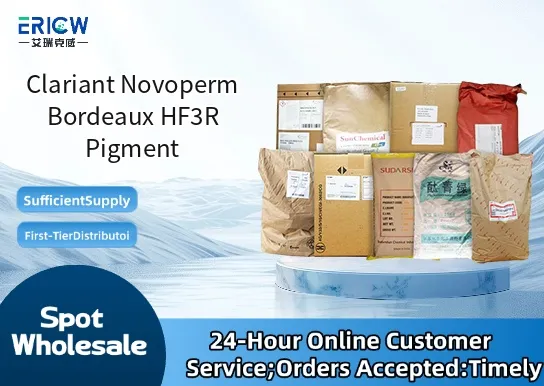
High chroma and excellent color strength for vibrant, consistent Bordeaux shade.
Outstanding lightfastness and weather resistance suitable for demanding outdoor applications.
Good thermal stability up to 200°C, enabling compatibility with high-temperature processing.
Excellent dispersibility in aqueous and solvent-based systems without flocculation.
Low heavy metal content, compliant with global regulatory requirements including REACH and RoHS.
Automotive coatings requiring durable, high-gloss metallic and solid finishes.
Industrial maintenance paints for infrastructure and machinery protection.
Plastic coloration including polyolefins, PVC, and engineering thermoplastics.
High-performance inks for packaging and label printing.
Architectural coatings where long-term color retention is critical.
| Chemical Type | Condensed azo pigment (Pigment Red 170 derivative) |
| Product Form | Fine powder |
| Appearance | Reddish-brown free-flowing powder |
| Primary Applications | Coatings, plastics, inks |
| Key Features | High opacity, excellent migration resistance |
| Benefits | Reduced dosage requirement, improved batch-to-batch consistency |
| Regulatory Compliance | REACH registered, non-GMO, SVHC-free |
| Storage Conditions | Store in cool, dry place; protect from moisture and direct sunlight |
Q1: What is the primary chemical class of Novoperm Bordeaux HF3R?
A: Novoperm Bordeaux HF3R is a high-performance perylene-based organic pigment, belonging to the perylene diimide family, known for exceptional lightfastness, thermal stability, and resistance to migration in demanding polymer applications.
Q2: Is this pigment suitable for food-contact plastics?
A: Novoperm Bordeaux HF3R is designed for use in non-food-contact applications. For food-contact plastics, Clariant offers alternative pigments specifically compliant with relevant regional regulatory frameworks — consult your Clariant technical representative for suitable options.
Q3: Which polymers is Novoperm Bordeaux HF3R most commonly used in?
A: This pigment demonstrates excellent compatibility and dispersion stability in engineering thermoplastics such as polyamide (PA), polybutylene terephthalate (PBT), and polyethylene terephthalate (PET), especially where high-temperature processing and long-term color retention are required.
Q4: How does HF3R differ from other Novoperm Bordeaux grades?
A: The “HF3R” designation indicates an optimized grade for high-flow, high-heat resistance applications—offering improved melt dispersibility and reduced plate-out tendency compared to standard Bordeaux variants, particularly in high-shear compounding and injection molding processes.
Q5: What is the recommended method for incorporating Novoperm Bordeaux HF3R into polymer systems?
A: Best results are achieved via masterbatch preparation using twin-screw extrusion under controlled temperature and shear conditions. Direct addition is possible but requires careful optimization of dispersion parameters to ensure uniform color development and optimal performance.
Contact With Us:
E-mail: wangxingqiang@ericwchem.com
Have a Questions? Call Us:
Add:
Building A1, Jiete Industrial Park, Huangpu District, Guangzhou City, Guangdong Province, China