English
 Español
 tiếng việt
 русский
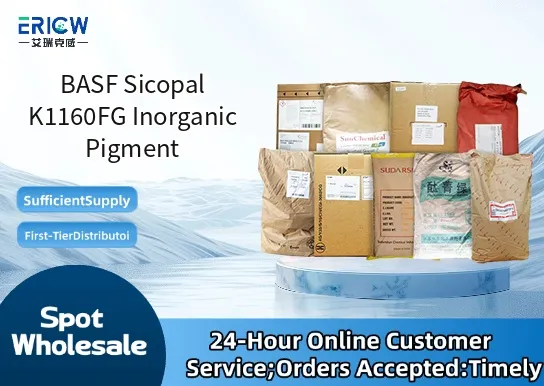
High thermal stability up to 800 °C, enabling use in high-temperature ceramic and refractory applications.
Excellent lightfastness and weather resistance, ensuring long-term color retention under UV exposure.
Chemically inert composition based on spinel-type mixed metal oxides, providing outstanding acid and alkali resistance.
Consistent particle size distribution for uniform dispersion and optimal opacity in demanding matrices.
Non-toxic and heavy-metal-free formulation compliant with global regulatory frameworks including REACH and RoHS.
Ceramic glazes and bodies for tableware, sanitaryware, and architectural tiles.
High-performance refractory coatings in metallurgical and furnace linings.
Coloration of inorganic binders such as sodium silicate, phosphate, and cement-based systems.
Specialty glass enamels requiring thermal and chemical robustness.
Fire-resistant intumescent coatings and passive fire protection materials.
| Chemical Type | Spinel-type mixed metal oxide (Co–Ni–Cr–Al system) |
| Product Form | Fine dry powder |
| Appearance | Dark gray to black granular powder |
| Primary Applications | Ceramics, refractories, inorganic coatings, specialty glasses |
| Key Features | Thermal stability, chemical inertness, UV resistance, non-volatility |
| Benefits | Color consistency at high firing temperatures, low migration risk, compatibility with inorganic matrices |
| Density (g/cm³) | 4.2–4.6 (typical) |
| Bulk Density (g/L) | 800–1,100 (free-flowing) |
Q1: What is the primary chemical composition and pigment type of Sicopal K1160FG?
A: Sicopal K1160FG is a high-performance inorganic pigment based on mixed metal oxides, specifically engineered for thermal and chemical stability. It belongs to the spinel-type pigment family, offering excellent opacity and consistent color performance in demanding polymer and coating applications.
Q2: Is Sicopal K1160FG suitable for use in food-contact plastics or regulated packaging applications?
A: Sicopal K1160FG is designed for industrial and technical applications where regulatory compliance with food-contact legislation is not required. It is not certified for direct food-contact use; customers requiring such compliance must consult BASF’s dedicated food-safe pigment portfolio and obtain formal regulatory documentation prior to use.
Q3: How does Sicopal K1160FG perform under high-temperature processing conditions?
A: This pigment exhibits outstanding thermal stability, maintaining color integrity and minimal degradation during standard polymer processing—including injection molding, extrusion, and calendering—up to temperatures commonly encountered in polyolefins and engineering thermoplastics. Its robustness supports consistent batch-to-batch appearance even in extended residence time operations.
Q4: What dispersion methods are recommended for optimal color development in polymer systems?
A: For best results, Sicopal K1160FG should be incorporated using high-shear compounding techniques—such as twin-screw extrusion—with appropriate carrier resins or masterbatch formulations. Pre-dispersed masterbatches are strongly recommended to ensure uniform distribution, minimize agglomeration, and maximize color strength and gloss retention.
Contact With Us:
E-mail: wangxingqiang@ericwchem.com
Have a Questions? Call Us:
Add:
Building A1, Jiete Industrial Park, Huangpu District, Guangzhou City, Guangdong Province, China