English
 Español
 tiếng việt
 русский
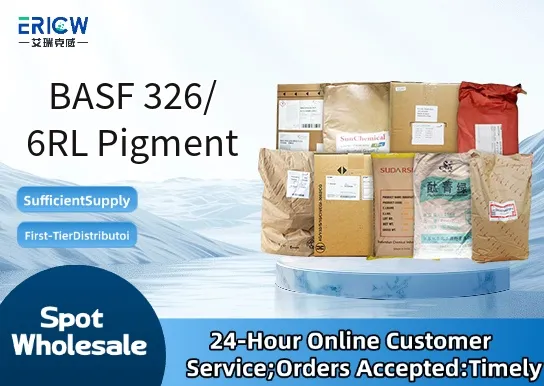
High chroma red shade with excellent lightfastness and weather resistance.
Good thermal stability suitable for processing temperatures up to 240 °C.
Excellent dispersibility in both polar and non-polar polymer matrices.
Low migration tendency, meeting stringent requirements for food-contact plastics.
Compliant with major global regulatory frameworks including EU REACH and US FDA 21 CFR §178.3297.
Polypropylene (PP) automotive interior parts.
Polyethylene (PE) packaging films for consumer goods.
Polyvinyl chloride (PVC) profiles and window frames.
Engineering plastics such as ABS and PC for electronic housings.
Masterbatch formulations for color concentrates in injection molding.
| Chemical Type | Organic Pigment – Quinacridone derivative |
| Product Form | Fine powder, free-flowing |
| Appearance | Red-violet powder |
| Primary Applications | Plastics, masterbatches, coatings |
| Key Features | High heat stability, low volatility, excellent UV resistance |
| Benefits | Consistent color batch-to-batch, minimal filter clogging in extrusion |
| Density (g/cm³) | 1.55–1.65 |
| Volatile Matter (wt%, 105 °C) | ≤ 0.5% |
Q1: What is the primary chemical class and functional role of BASF 326/6RL Pigment?
A: BASF 326/6RL is an organic pigment belonging to the diketopyrrolopyrrole (DPP) family, engineered for high chromatic strength, excellent lightfastness, and thermal stability. It functions primarily as a colorant in demanding polymer systems where long-term color integrity and processing resilience are critical.
Q2: Which polymer matrices is BASF 326/6RL Pigment most commonly used in, and what processing conditions is it designed to withstand?
A: This pigment is widely employed in polyolefins (e.g., PP and HDPE), engineering thermoplastics (such as PA6 and PBT), and certain high-temperature elastomers. It is formulated to retain dispersion quality and color performance during melt processing at temperatures up to approximately 300 °C, depending on residence time and shear profile.
Q3: How does BASF 326/6RL compare to standard DPP reds in terms of dispersion behavior and rheological impact?
A: BASF 326/6RL features a surface-treated particle morphology optimized for rapid, uniform wetting and reduced agglomeration in molten polymers. Compared with conventional DPP pigments, it typically delivers lower viscosity impact in masterbatches and improved flow stability—especially in thin-wall or high-speed injection molding applications.
Q4: Is BASF 326/6RL suitable for applications requiring regulatory compliance for food contact or toys?
A: BASF 326/6RL is not pre-approved for direct food-contact or toy-safety regulated applications under major global frameworks. Customers intending such use must conduct full formulation-specific compliance verification—including migration testing and regulatory dossier review—based on their target market and final article requirements.
Q5: What is the recommended dosage range for achieving optimal color strength without compromising physical properties?
A: Typical usage levels range from 0.1% to 2% by weight in the final polymer, depending on substrate, desired opacity, and processing method. For most industrial applications, effective coloration is achieved at low concentrations—often below 1%—minimizing potential effects on mechanical performance while maintaining excellent tinting strength and UV resistance.
Contact With Us:
E-mail: wangxingqiang@ericwchem.com
Have a Questions? Call Us:
Add:
Building A1, Jiete Industrial Park, Huangpu District, Guangzhou City, Guangdong Province, China