English
 Español
 tiếng việt
 русский
High thermal stability suitable for processing temperatures up to 280°C.
Excellent lightfastness and weather resistance (rated ISO 105-B02, Grade 7–8).
Low migration and bleed resistance in polyolefin and PVC matrices.
Consistent batch-to-batch color reproducibility with narrow chromatic tolerance (ΔE ≤ 0.8).
Non-hazardous formulation compliant with REACH and RoHS directives.
Automotive interior components (dashboards, trim, seat fabrics).
Food-contact-grade packaging films and containers (PP, HDPE).
Construction profiles and window frames requiring long-term UV durability.
Electrical conduit and cable sheathing materials.
Household appliances housings and consumer electronics enclosures.
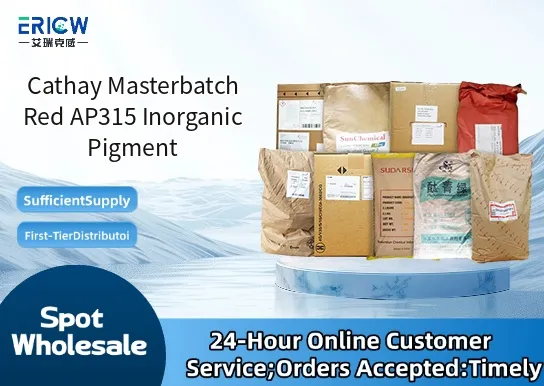
| Chemical Type | Iron oxide-based inorganic pigment (α-Fe₂O₃) |
| Product Form | Free-flowing granular masterbatch (carrier: polyethylene) |
| Appearance | Uniform brick-red granules |
| Primary Applications | Polyolefins (PP, PE), PVC, PS, ABS |
| Key Features | Heat stable, non-bleeding, low dust generation |
| Benefits | Reduced machine fouling, improved color consistency, extended service life |
| Regulatory Compliance | REACH registered, RoHS compliant, FDA non-intent for food contact (subject to final formulation review) |
| Recommended Dosage | 1.5–4.0 wt% depending on substrate and opacity requirement |
Q1: What types of polymers is Cathay Masterbatch Red AP315 compatible with?
A: Cathay Masterbatch Red AP315 is formulated for excellent compatibility with common thermoplastics including polyethylene (PE), polypropylene (PP), and polystyrene (PS). It demonstrates good thermal stability during extrusion and injection molding processes typical for these resins.
Q2: Is this pigment suitable for food-contact applications?
A: Cathay Masterbatch Red AP315 is based on inorganic pigments known for high chemical inertness and low extractability. While it is not pre-certified for food contact, its composition aligns with general requirements for indirect food-contact plastics when incorporated into compliant base resins and processed under appropriate conditions. End-use compliance must be verified by the compounder or converter per applicable regional regulations.
Q3: How should this masterbatch be stored to maintain performance?
A: Store in a cool, dry location away from direct sunlight and sources of heat or humidity. Keep containers sealed tightly after opening to prevent moisture absorption and avoid contamination. Under proper storage conditions, shelf life typically exceeds 12 months from date of manufacture.
Contact With Us:
E-mail: wangxingqiang@ericwchem.com
Have a Questions? Call Us:
Add:
Building A1, Jiete Industrial Park, Huangpu District, Guangzhou City, Guangdong Province, China