English
 Español
 tiếng việt
 русский
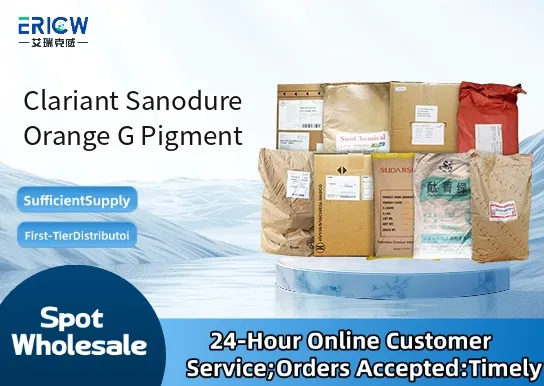
High thermal stability suitable for demanding polymer processing conditions.
Excellent lightfastness and weather resistance in outdoor applications.
Good dispersibility in both polar and non-polar polymer systems.
Non-halogenated, compliant with major global regulatory frameworks including REACH.
Consistent batch-to-batch color performance and narrow hue tolerance.
Polypropylene (PP) fibers and injection-molded automotive parts.
Polyethylene (PE) blow-molded containers and agricultural films.
Engineering plastics such as ABS and PC for consumer electronics housings.
Masterbatch formulations for color concentrates used across flexible packaging.
Exterior architectural coatings requiring long-term UV durability.
| Chemical Type | Azo pigment (Benzimidazolone derivative) |
| Product Form | Fine powder |
| Appearance | Orange-red free-flowing powder |
| Primary Applications | Polyolefins, engineering plastics, coatings, masterbatches |
| Key Features | Thermally stable, non-halogenated, high chroma |
| Benefits | Reduced filter pressure buildup, low migration, excellent dispersion |
| Regulatory Compliance | REACH registered; compliant with FDA 21 CFR §178.3297 (for food-contact plastics) |
| Density (g/cm³) | 1.55–1.65 |
Q1: What is the primary application field for Sanodure Orange G Pigment?
A: Sanodure Orange G Pigment is specifically developed for high-performance coloration of polyolefins—especially PP and PE—in demanding applications such as automotive interior parts, technical packaging, and durable consumer goods where excellent thermal stability and dispersion behavior are required.
Q2: Is Sanodure Orange G suitable for food-contact polyolefin applications?
A: Yes—Sanodure Orange G is designed to meet regulatory expectations for food-contact applications in polyolefins under major global frameworks. It is manufactured under strict quality control and complies with Clariant’s internal food-contact safety policy; final compliance depends on end-use conditions and applicable local regulations.
Q3: How does Sanodure Orange G perform during high-temperature processing?
A: This pigment exhibits very good thermal stability, enabling reliable performance in standard polyolefin processing methods—including injection molding, extrusion, and blow molding—at temperatures up to 280 °C without significant hue shift or degradation.
Q4: What is the typical dosage range when using Sanodure Orange G in polyolefin compounds?
A: Dosage depends on the desired shade intensity and base polymer characteristics, but it is typically used at low concentrations—generally ranging from 0.1% to 2% by weight—to achieve vibrant, uniform orange tones with excellent opacity and batch-to-batch consistency.
Contact With Us:
E-mail: wangxingqiang@ericwchem.com
Have a Questions? Call Us:
Add:
Building A1, Jiete Industrial Park, Huangpu District, Guangzhou City, Guangdong Province, China