English
 Español
 tiếng việt
 русский
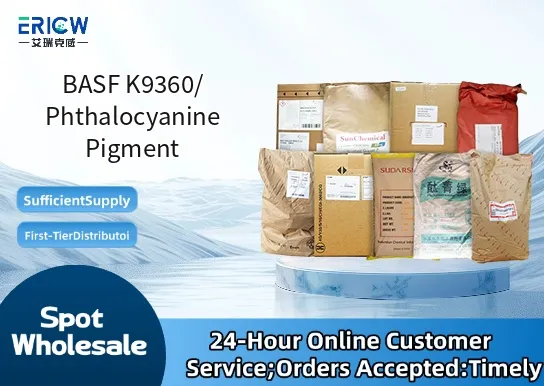
High color strength and excellent tinting power in organic solvent-based and water-based systems.
Outstanding lightfastness and weather resistance, meeting ISO 105-B02 and ISO 105-A02 standards.
Good thermal stability up to 220 °C, suitable for high-temperature processing applications.
Excellent chemical resistance against acids, alkalis, and common solvents.
Low migration tendency in polymer matrices, ensuring color consistency in PVC, polyolefins, and engineering plastics.
Automotive coatings requiring long-term durability and gloss retention.
Industrial maintenance paints exposed to UV radiation and harsh environmental conditions.
Plastic coloration for exterior profiles, automotive interior parts, and appliance housings.
Inks for packaging films demanding FDA-compliant food contact safety (subject to local regulatory approval).
High-performance powder coatings for architectural and infrastructure applications.
| Chemical Type | Copper phthalocyanine (CuPc), β-crystal form |
| Product Form | Free-flowing, dust-reduced granular pigment |
| Appearance | Intense greenish-blue powder with uniform particle size distribution |
| Primary Applications | Coatings, plastics, inks, and powder coatings |
| Key Features | High chroma, excellent dispersibility, low oil absorption (~45 g/100 g) |
| Benefits | Reduced energy consumption during dispersion; improved batch-to-batch reproducibility |
| Regulatory Compliance | REACH registered; compliant with EU Directive 2004/42/EC (VOC) |
| Storage Conditions | Store in dry, cool, well-ventilated area; avoid direct sunlight and moisture |
Q1: What is the primary chemical composition and pigment class of BASF K9360?
A: BASF K9360 is a high-performance copper phthalocyanine-based pigment, belonging to the phthalocyanine blue pigment family. It features a robust, thermally stable macrocyclic structure with excellent lightfastness and weather resistance.
Q2: In which types of polymer systems is BASF K9360 commonly used?
A: This pigment is widely employed in engineering thermoplastics such as polyamide (PA), polybutylene terephthalate (PBT), and polyethylene terephthalate (PET), particularly where high-temperature processing stability and color consistency are required.
Q3: How does BASF K9360 perform under high-shear and high-temperature compounding conditions?
A: BASF K9360 exhibits excellent thermal and mechanical stability during extrusion and injection molding processes, maintaining its crystalline integrity and color strength without significant degradation or hue shift under typical industrial processing conditions.
Q4: Is BASF K9360 suitable for applications requiring regulatory compliance in food-contact or automotive interiors?
A: While not inherently certified for all regulated end uses, BASF K9360 is formulated to meet stringent purity requirements and is frequently selected for demanding applications including automotive interior plastics and food-contact polymers—subject to final formulation validation and applicable regional regulatory assessments.
Q5: What is the typical dosage range when incorporating BASF K9360 into polymer masterbatches?
A: Dosage depends on the target color strength and polymer matrix, but it is typically used at low concentrations—generally ranging from 0.1% to 2% by weight in final compounds—to achieve optimal dispersion, opacity, and chromatic performance.
Contact With Us:
E-mail: wangxingqiang@ericwchem.com
Have a Questions? Call Us:
Add:
Building A1, Jiete Industrial Park, Huangpu District, Guangzhou City, Guangdong Province, China