English
 Español
 tiếng việt
 русский
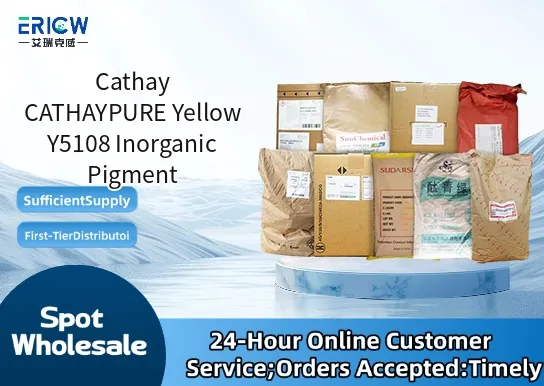
Excellent thermal stability up to 700 °C, suitable for high-temperature processing.
High color strength and consistent chromaticity across production batches.
Outstanding lightfastness (ASTM Level 7–8) and weather resistance in outdoor applications.
Non-toxic, heavy-metal-free formulation compliant with global regulatory standards including EN 71-3 and RoHS.
Good dispersibility in both aqueous and solvent-based systems without requiring specialized surfactants.
Ceramic glazes and underglaze decorations for tableware and architectural tiles.
High-performance coatings for industrial equipment and automotive refinish primers.
Coloration of inorganic binders in construction materials such as concrete, stucco, and fiber-cement boards.
Plastic color concentrates for engineering thermoplastics processed above 280 °C (e.g., PPS, PEEK).
Specialty glass enamels and frits requiring stable yellow hue retention during firing.
| Chemical Type | Mixed metal oxide (Zinc Iron Chromite-based) |
| Product Form | Fine dry powder |
| Appearance | Bright yellow granular powder |
| Primary Applications | Ceramics, high-temp coatings, construction materials, engineering plastics |
| Key Features | Thermal stability, lightfastness, non-toxicity, batch-to-batch consistency |
| Benefits | Reduced need for stabilizer additives; compatible with alkaline and acidic systems |
| Density (g/cm³) | 4.2–4.5 |
| Particle Size (D50, µm) | 0.8–1.2 |
Q1: What are the key performance advantages of CATHAYPURE Yellow Y5108 compared to organic yellow pigments?
A: CATHAYPURE Yellow Y5108 offers superior thermal stability, lightfastness, and chemical resistance due to its inorganic composition. It maintains consistent color performance under high-temperature processing conditions—such as those encountered in engineering plastics compounding—and shows minimal fading during long-term outdoor exposure, unlike many organic alternatives.
Q2: Is this pigment suitable for use in food-contact plastics or packaging applications?
A: CATHAYPURE Yellow Y5108 is formulated for industrial and general-purpose applications. While it meets common heavy metal limits for general-use pigments, formal compliance with food-contact regulations (e.g., FDA 21 CFR or EU Framework Regulation) requires evaluation within the final formulation and processing context. Customers intending food-contact use should consult Cathay Technical Support for application-specific guidance and documentation.
Q3: How does Y5108 disperse in polymer systems, and what dispersion aids are recommended?
A: As a fine-particle inorganic pigment, Y5108 achieves optimal dispersion through high-shear compounding or masterbatch preparation. Its surface chemistry supports compatibility with standard polyolefin and engineering plastic carriers. For best results, pairing with non-ionic dispersants or carrier-resin-matched additives is generally recommended—specific selection depends on the base polymer and processing method.
Q4: Can Y5108 be used in water-based coatings or inks?
A: Yes—Y5108 can be incorporated into aqueous systems, though stable dispersion typically requires appropriate surfactants or polymeric stabilizers to prevent agglomeration. Performance in water-based media depends on pH, ionic strength, and binder compatibility; preliminary lab-scale testing is advised to confirm rheology, gloss, and color development.
Contact With Us:
E-mail: wangxingqiang@ericwchem.com
Have a Questions? Call Us:
Add:
Building A1, Jiete Industrial Park, Huangpu District, Guangzhou City, Guangdong Province, China