English
 Español
 tiếng việt
 русский
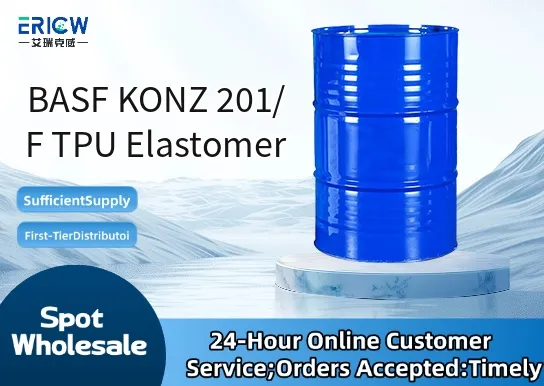
Excellent abrasion resistance for extended service life in demanding mechanical environments.
High elasticity and recovery performance across a wide temperature range (–30 °C to +80 °C).
Good processability via injection molding, extrusion, and blow molding without requiring drying.
Outstanding oil, grease, and hydrocarbon resistance compared to conventional thermoplastic elastomers.
Low compression set ensuring dimensional stability under prolonged static load conditions.
Automotive interior trim components including instrument panel skins and door armrests.
Industrial seals, gaskets, and dynamic sealing elements for hydraulic and pneumatic systems.
Flexible hoses and tubing for fluid transfer in mobile hydraulics and agricultural equipment.
Protective overmolding for electronic connectors and sensor housings requiring impact resilience.
Footwear midsoles and performance outsoles where energy return and wear resistance are critical.
| Chemical Type | Thermoplastic Polyurethane (TPU), aromatic polyester-based |
| Product Form | Pellets (free-flowing, cylindrical) |
| Appearance | Off-white to light beige, translucent granules |
| Primary Applications | Dynamic sealing, overmolding, flexible tubing, automotive soft-touch parts |
| Key Features | Abrasion resistance, elasticity, oil resistance, low compression set |
| Processing Methods | Injection molding, extrusion, blow molding |
| Recommended Drying | Not required for standard processing; optional mild drying (<60 °C, 2–4 h) for high-humidity environments |
| Storage Conditions | Store in original sealed packaging at 15–25 °C, <50% relative humidity |
Q1: What is the primary function of BASF KONZ 201/F in TPU formulations?
A: BASF KONZ 201/F is a specialized processing aid designed to improve melt flow and reduce extrusion torque during TPU compounding and processing. It helps enhance surface finish, reduce die buildup, and support consistent throughput in extrusion and injection molding operations.
Q2: Is KONZ 201/F compatible with all major TPU chemistries (e.g., polyester-, polyether-, and polycaprolactone-based)?
A: Yes, KONZ 201/F demonstrates broad compatibility across aromatic and aliphatic TPU systems, including polyester-, polyether-, and polycaprolactone-based grades. Compatibility should be verified under actual processing conditions due to formulation-specific interactions.
Q3: How is KONZ 201/F typically incorporated into TPU compounds?
A: It is generally added during the masterbatch or dry-blend stage prior to extrusion. Due to its low-melting, waxy nature, it disperses readily in molten TPU and does not require pre-dissolution. Uniform distribution is best achieved using standard high-shear mixing equipment.
Q4: Does KONZ 201/F affect the mechanical or thermal properties of the final TPU product?
A: At recommended use levels, KONZ 201/F has minimal impact on tensile strength, elongation, or heat resistance. Some formulations may show slight reductions in hardness or modulus—these effects are typically subtle and formulation-dependent. Performance validation under end-use conditions is recommended.
Q5: Can KONZ 201/F be used in applications requiring food contact or skin contact?
A: KONZ 201/F is not pre-qualified for food-contact or dermal applications. Its suitability for such uses depends on full regulatory assessment of the final compound—including migration behavior, toxicological evaluation, and compliance with applicable regional requirements.
Contact With Us:
E-mail: wangxingqiang@ericwchem.com
Have a Questions? Call Us:
Add:
Building A1, Jiete Industrial Park, Huangpu District, Guangzhou City, Guangdong Province, China