English
 Español
 tiếng việt
 русский
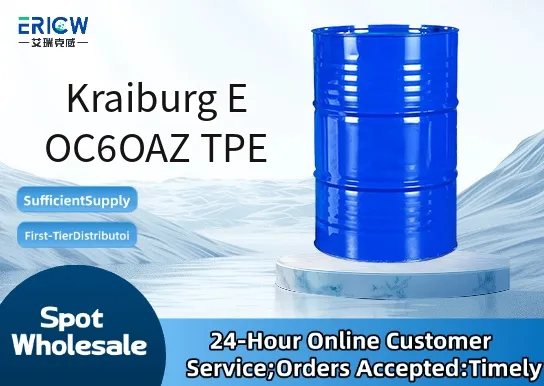
Thermoplastic elastomer based on SEBS (styrene–ethylene–butylene–styrene) copolymer matrix for excellent elasticity and recovery.
Halogen-free formulation compliant with RoHS and REACH directives, supporting sustainable product design.
Outstanding processability via injection molding and extrusion with low melt viscosity and minimal thermal degradation.
Good resistance to UV exposure and ambient ozone, enabling durable outdoor and long-term indoor applications.
Soft-touch surface finish with adjustable hardness (Shore A 40–55 range), ideal for ergonomic overmolding.
Overmolding of rigid PP, ABS, or PC substrates in consumer electronics housings and tool grips.
Seals and gaskets for HVAC components requiring compression set resistance and weather stability.
Medical device components such as non-linting tubing connectors and soft-touch actuator buttons (ISO 10993-compatibility supported upon request).
Automotive interior trim parts including gear shift boots, cup holder liners, and console seals.
Reusable food-contact–compatible packaging closures (subject to final regulatory validation per FDA 21 CFR §177.2600).
| Chemical Type | SEBS-based thermoplastic elastomer |
| Product Form | Natural-colored pellets (standard) |
| Appearance | Opaque, uniform granules with smooth surface |
| Hardness (Shore A, ASTM D2240) | 48 ± 3 |
| Melt Flow Rate (230 °C / 2.16 kg, ASTM D1238) | 18–22 g/10 min |
| Density (ASTM D792) | 0.92–0.94 g/cm³ |
| Continuous Use Temperature Range | −40 °C to +70 °C |
| Processing Method | Injection molding, extrusion, two-shot molding |
Q1: What is the primary function of Kraiburg E OC6OAZ TPE in thermoplastic elastomer formulations?
A: Kraiburg E OC6OAZ TPE is a functional additive designed to enhance melt processability and improve surface finish in TPE compounds, particularly in dynamic vulcanized TPV systems. It supports better dispersion of fillers and stabilizes morphology during extrusion or injection molding.
Q2: Is Kraiburg E OC6OAZ TPE compatible with common TPE base polymers such as SEBS, TPO, and TPV?
A: Yes, it demonstrates broad compatibility with styrenic block copolymers (e.g., SEBS), polyolefin-based TPOs, and dynamically vulcanized TPVs. Compatibility should be confirmed experimentally for specific polymer blends and processing conditions.
Q3: How is Kraiburg E OC6OAZ TPE typically incorporated into a TPE formulation?
A: It is generally introduced during the compounding stage—either pre-blended with other additives or added directly to the extruder feed throat. Dosage depends on formulation requirements but typically ranges from 0.1% to 2% by weight relative to the total compound.
Q4: Does Kraiburg E OC6OAZ TPE affect the final mechanical properties of the TPE compound?
A: When used within recommended dosage ranges, it does not significantly compromise tensile strength or elongation at break. In many cases, improved dispersion leads to more consistent mechanical performance across batches.
Contact With Us:
E-mail: wangxingqiang@ericwchem.com
Have a Questions? Call Us:
Add:
Building A1, Jiete Industrial Park, Huangpu District, Guangzhou City, Guangdong Province, China