English
 Español
 tiếng việt
 русский
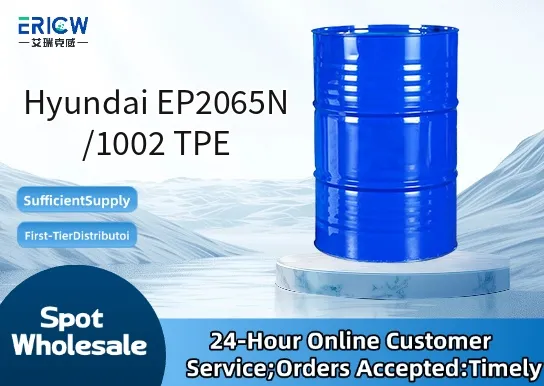
Excellent melt processability for high-speed extrusion and injection molding.
Superior soft-touch feel with balanced elasticity and surface tack resistance.
Good compatibility with polypropylene (PP) and polyethylene (PE) for co-extrusion and overmolding.
Enhanced thermal stability enabling processing up to 220 °C without significant degradation.
Low extractables and compliant with FDA 21 CFR §177.2600 for indirect food contact applications.
Soft-grip overmolded handles for power tools and hand-held appliances.
Sealing rings and gaskets in automotive fluid systems.
Flexible tubing and medical device components requiring biocompatibility support.
Consumer electronics casings and protective bumpers requiring impact absorption and aesthetic finish.
| Chemical Type | Thermoplastic Elastomer (TPE), Styrenic Block Copolymer (SBC)-based |
| Product Form | Pellets |
| Appearance | Translucent, off-white granules |
| Hardness (Shore A) | 65 ± 3 |
| Melt Flow Rate (200 °C / 5 kg) | 25–35 g/10 min |
| Density (ASTM D792) | 0.91–0.93 g/cm³ |
| Tensile Strength (ASTM D412) | 12–15 MPa |
| Elongation at Break (ASTM D412) | 550–650 % |
Q1: What is the primary application domain for Hyundai EP2065N/1002 TPE?
A: Hyundai EP2065N/1002 TPE is a thermoplastic elastomer formulated primarily for soft-touch overmolding and functional grip applications—especially in automotive interior components, consumer electronics housings, and industrial tool handles where resilience, tactile comfort, and adhesion to rigid substrates like PP or ABS are required.
Q2: Is EP2065N/1002 compatible with common injection molding equipment and processing conditions?
A: Yes—it is designed for standard injection molding processes and exhibits good thermal stability and melt flow behavior. Typical processing temperatures range between 170 °C and 210 °C, depending on part geometry and equipment configuration. Drying is recommended prior to processing to minimize surface defects.
Q3: How does EP2065N/1002 achieve adhesion to polypropylene (PP) or other polyolefin substrates?
A: The grade incorporates tailored compatibilizers and functionalized polymer blocks that promote interfacial bonding during overmolding. Adhesion performance is optimized when substrate surface energy and mold temperature are appropriately controlled—no primer or secondary bonding step is typically required for standard PP grades.
Q4: Can EP2065N/1002 be used in applications requiring regulatory compliance for food contact or skin contact?
A: While EP2065N/1002 is manufactured using FDA-compliant raw materials and contains no intentionally added heavy metals or restricted phthalates, formal regulatory clearance (e.g., for food contact or medical devices) must be verified case-by-case based on final formulation, processing history, and end-use conditions. Customers should consult Hyundai’s technical documentation and conduct appropriate testing for their specific application.
Contact With Us:
E-mail: wangxingqiang@ericwchem.com
Have a Questions? Call Us:
Add:
Building A1, Jiete Industrial Park, Huangpu District, Guangzhou City, Guangdong Province, China