English
 Español
 tiếng việt
 русский
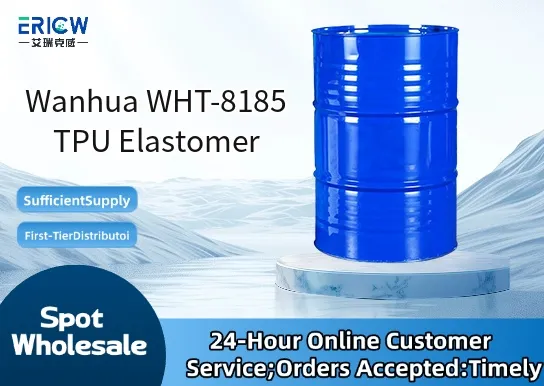
Excellent abrasion resistance for extended service life in demanding mechanical environments.
High tensile strength and elongation at break, enabling superior elasticity and recovery performance.
Good low-temperature flexibility down to –40 °C without significant loss of toughness.
Outstanding oil and grease resistance, maintaining dimensional stability in hydrocarbon-rich conditions.
Process-friendly melt flow behavior suitable for extrusion, injection molding, and calendering.
Automotive interior trim components including door panels, armrests, and instrument bezels.
Industrial hoses and pneumatic tubing requiring high pressure resistance and kink recovery.
Footwear midsoles and outsoles where dynamic cushioning and wear durability are critical.
Conveyor belts and power transmission belts operating under variable load and temperature conditions.
Medical tubing and non-invasive wearable device housings compliant with ISO 10993 biocompatibility guidelines.
| Chemical Type | Aliphatic polyester-based thermoplastic polyurethane |
| Product Form | Pellets |
| Appearance | Off-white to light yellow free-flowing granules |
| Primary Applications | Extrusion, injection molding, calendering |
| Key Features | Abrasion resistance, low-temperature flexibility, oil resistance |
| Benefits | Reduced part weight vs. rubber, recyclable processing, consistent batch-to-batch performance |
| Processing Temperature Range | 180–220 °C (barrel) |
| Storage Conditions | Store in dry, ventilated area below 35 °C; keep sealed to prevent moisture absorption |
Q1: What are the primary processing methods suitable for WHT-8185?
A: WHT-8185 is designed for melt-processing techniques including extrusion, injection molding, and blow molding. Its balanced melt viscosity and thermal stability support consistent flow and good surface finish across these methods.
Q2: How does WHT-8185 perform in applications requiring abrasion resistance and flexibility?
A: As a polyester-based TPU elastomer, WHT-8185 offers excellent resistance to wear, tear, and repeated flexing—making it well-suited for dynamic components such as industrial rollers, automotive trim, and high-performance footwear uppers.
Q3: Is WHT-8185 compatible with common polymer blends or additives?
A: Yes—WHT-8185 demonstrates good compatibility with other thermoplastic polyurethanes and selected engineering thermoplastics. It also accepts standard stabilizers, pigments, and processing aids when incorporated at appropriate levels and under controlled thermal conditions.
Q4: What are the recommended drying conditions prior to processing?
A: To ensure optimal mechanical performance and melt consistency, WHT-8185 should be dried thoroughly before processing—typically at 80–90 °C for 2–4 hours using a dehumidifying dryer, until moisture content is below 0.05%.
Contact With Us:
E-mail: wangxingqiang@ericwchem.com
Have a Questions? Call Us:
Add:
Building A1, Jiete Industrial Park, Huangpu District, Guangzhou City, Guangdong Province, China