English
 Español
 tiếng việt
 русский
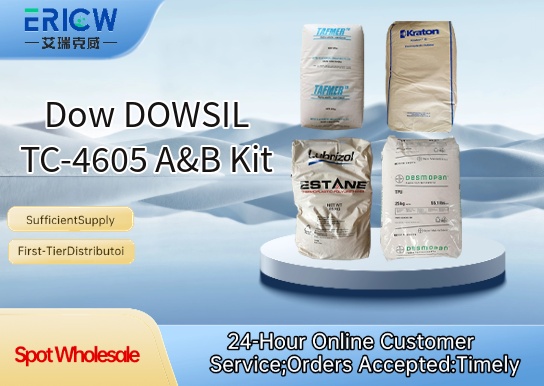
Two-component, addition-cure silicone thermal interface material offering excellent long-term reliability under thermal cycling.
Low thermal resistance and high thermal conductivity (1.5 W/m·K) for efficient heat dissipation in power electronics.
Non-sag, paste-like consistency enables precise dispensing and gap-filling without slumping or migration.
UL 94 V-0 rated for flame retardancy and compliant with RoHS and REACH regulatory requirements.
Stable performance across wide operating temperature range (–40 °C to +200 °C).
Thermal management of IGBT modules and power inverters in electric vehicles (EVs) and hybrid systems.
Heat transfer between CPUs, GPUs, and heatsinks in high-performance computing and data center hardware.
Interface bonding in LED lighting assemblies requiring durable thermal conduction and electrical insulation.
Thermal interface layer in renewable energy converters, including solar inverters and wind turbine power electronics.
| Chemical Type | Platinum-catalyzed addition-cure silicone elastomer |
| Product Form | Two-part kit (Component A: base; Component B: catalyst) |
| Appearance | Off-white, homogeneous paste (A); off-white, viscous liquid (B) |
| Primary Applications | Thermal interface material (TIM) for power electronics and high-heat dissipation devices |
| Key Features | Non-sag, low thermal resistance, flame-retardant, electrically insulating |
| Benefits | Improved thermal reliability, simplified automated dispensing, reduced interfacial voids |
| Curing Mechanism | Addition cure (no by-products) |
| Storage Stability | 12 months at ≤25 °C (unopened containers) |
Contact With Us:
E-mail: wangxingqiang@ericwchem.com
Have a Questions? Call Us:
Add:
Building A1, Jiete Industrial Park, Huangpu District, Guangzhou City, Guangdong Province, China