English
 Español
 tiếng việt
 русский
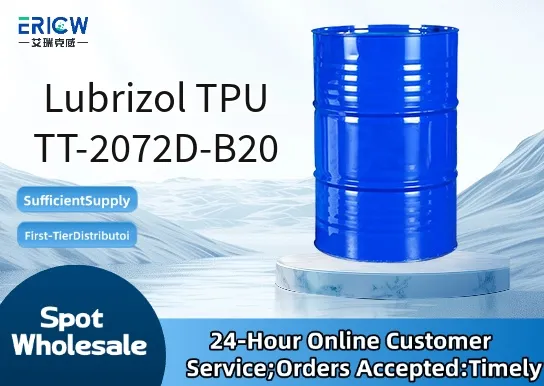
Excellent melt processability for high-speed extrusion and injection molding.
Outstanding abrasion resistance and mechanical toughness at ambient and low temperatures.
Good hydrolytic stability, suitable for humid or moisture-exposed environments.
Enhanced clarity and surface gloss for premium aesthetic performance in finished parts.
Compatible with common colorants and additives for tailored formulation flexibility.
Automotive interior trim components including instrument panel skins and door panels.
Consumer electronics protective cases and wearable device housings.
Medical tubing and non-implantable fluid-handling devices requiring clarity and flexibility.
High-performance cables and wire jacketing for industrial and data transmission use.
| Chemical Type | Thermoplastic Polyurethane (TPU), Polyester-based |
| Product Form | Pellets |
| Appearance | Translucent, natural-colored pellets |
| Primary Applications | Extrusion, injection molding, calendering |
| Key Features | High clarity, low-temperature flexibility, good UV resistance |
| Benefits | Reduced cycle time, excellent surface finish, recyclable processing |
| Density (g/cm³) | 1.20–1.24 (ASTM D792) |
| Melt Flow Rate (g/10 min) | 15–22 (210 °C / 2.16 kg, ASTM D1238) |
Q1: What is the primary function of Lubrizol TPU TT-2072D-B20 in thermoplastic polyurethane (TPU) formulations?
A: Lubrizol TPU TT-2072D-B20 is a specialized processing aid and surface modifier designed to improve melt flow, reduce extrusion pressure, and enhance surface gloss and clarity in TPU compounds—particularly in transparent or light-colored applications.
Q2: Is TT-2072D-B20 compatible with common TPU base resins, including polyester- and polyether-based grades?
A: Yes, TT-2072D-B20 is formulated for broad compatibility across major TPU chemistries. It disperses readily during standard compounding processes such as twin-screw extrusion and maintains stability without phase separation under typical processing conditions.
Q3: How should TT-2072D-B20 be incorporated into TPU formulations?
A: It is typically added directly to the TPU resin during compounding—either pre-blended with pellets or fed gravimetrically downstream. No pre-drying is required, and it performs effectively at standard TPU processing temperatures (160–220 °C), though optimal dispersion is achieved with sufficient shear history.
Q4: Does TT-2072D-B20 affect the mechanical properties of the final TPU product?
A: When used within recommended dosage ranges, TT-2072D-B20 has minimal impact on tensile strength, elongation, or hardness. Its primary influence is rheological and aesthetic; however, excessive loading may slightly reduce modulus or abrasion resistance, so formulation optimization is advised.
Q5: Can TT-2072D-B20 support regulatory compliance for food-contact or medical-grade TPU applications?
A: TT-2072D-B20 is not pre-certified for direct food contact or medical use. Its suitability for regulated applications depends on full system evaluation—including final formulation, processing conditions, and end-use requirements—and must be verified by the compounder or end-user against applicable regional regulations.
Contact With Us:
E-mail: wangxingqiang@ericwchem.com
Have a Questions? Call Us:
Add:
Building A1, Jiete Industrial Park, Huangpu District, Guangzhou City, Guangdong Province, China