English
 Español
 tiếng việt
 русский
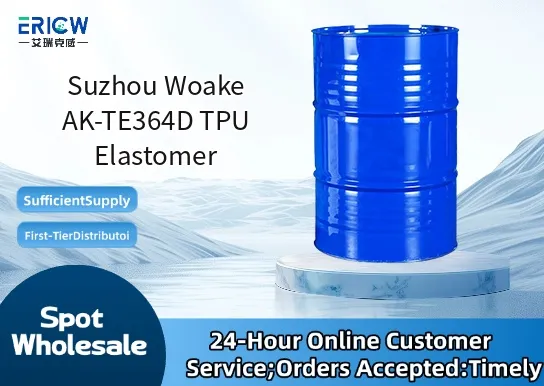
Excellent abrasion resistance for extended service life in demanding mechanical environments.
Outstanding elasticity and recovery performance, maintaining shape integrity after repeated deformation.
Good low-temperature flexibility down to –30 °C without significant stiffness increase.
Compatible with common processing methods including extrusion, injection molding, and calendering.
Low inherent moisture absorption, ensuring dimensional stability during storage and processing.
High-performance automotive interior trim and soft-touch components.
Industrial hoses and pneumatic tubing requiring flex fatigue resistance.
Wear-resistant footwear uppers and midsole layers.
Flexible cable jacketing and protective sheathing for electronics and robotics.
Medical-grade non-PVC tubing and wearable device housings (subject to biocompatibility validation).
| Chemical Type | Aliphatic polyester-based thermoplastic polyurethane |
| Product Form | Pellets (free-flowing, uniform size) |
| Appearance | Translucent ivory granules |
| Density (g/cm³) | 1.18–1.22 (ASTM D792) |
| Melt Flow Index (g/10 min) | 10–14 (at 210 °C, 5 kg load; ASTM D1238) |
| Shore A Hardness | 85–88 (ASTM D2240) |
| Tensile Strength (MPa) | 32–36 (ASTM D412) |
| Elongation at Break (%) | 480–520 (ASTM D412) |
Q1: What are the key processing advantages of AK-TE364D compared to conventional TPU grades?
A: AK-TE364D offers enhanced melt stability and reduced viscosity sensitivity during extrusion and injection molding, enabling smoother flow in complex geometries and improved surface finish. Its balanced thermal degradation profile supports wider processing windows without significant yellowing or gel formation.
Q2: Is AK-TE364D suitable for applications requiring long-term hydrolytic stability?
A: Yes — AK-TE364D is formulated with hydrolysis-resistant polyester-based chemistry and includes stabilizers designed to delay chain scission under humid or elevated-temperature conditions. Performance in moist environments is significantly improved over standard polyester TPUs, though prolonged exposure to hot alkaline solutions should be avoided.
Q3: Can AK-TE364D be blended with other thermoplastics or elastomers?
A: AK-TE364D demonstrates good compatibility with common engineering thermoplastics such as PC, ABS, and certain polyesters when used as a compatibilizer or impact modifier. For optimal dispersion and interfacial adhesion, melt blending parameters (e.g., temperature profile, shear rate, residence time) should be optimized on a case-by-case basis.
Q4: How does AK-TE364D perform in low-temperature flexibility applications?
A: AK-TE364D maintains excellent elasticity and resilience down to −30 °C, with minimal stiffening or loss of elongation. Its soft-segment architecture contributes to consistent flex fatigue resistance in dynamic cold-environment uses such as automotive seals and outdoor sporting goods components.
Contact With Us:
E-mail: wangxingqiang@ericwchem.com
Have a Questions? Call Us:
Add:
Building A1, Jiete Industrial Park, Huangpu District, Guangzhou City, Guangdong Province, China