English
 Español
 tiếng việt
 русский
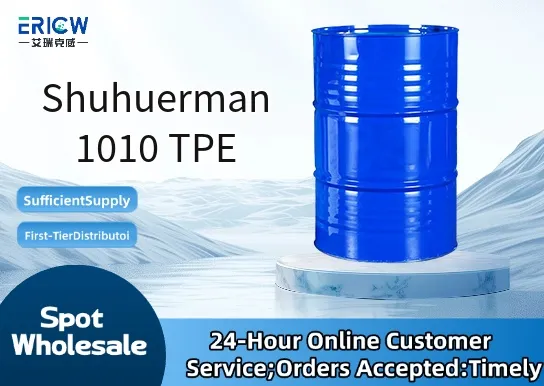
Excellent elasticity and recovery performance at room temperature
Good processability via injection molding, extrusion, and blow molding
Non-toxic, halogen-free, and compliant with RoHS and REACH directives
Superior soft-touch feel with adjustable Shore A hardness (80–95A)
Enhanced thermal stability for consistent processing between 160–220°C
Soft-grip overmolding for power tools and hand-held appliances
Seals and gaskets in automotive interior components
Ergonomic grips for medical devices and diagnostic equipment
Flexible tubing and connectors for fluid handling systems
Consumer electronics casings and protective covers
| Chemical Type | Thermoplastic Elastomer (TPE) – Styrenic Block Copolymer (SBC) based |
| Product Form | Pellets |
| Appearance | Translucent to opaque, uniform granular morphology |
| Primary Applications | Overmolding, soft-touch components, sealing elements |
| Key Features | Elasticity, melt-processability, adhesion to PP/PS/ABS substrates |
| Benefits | Reduced part weight vs. rubber, recyclable scrap, no vulcanization required |
| Storage Conditions | Store in dry, cool, well-ventilated area; avoid direct sunlight |
| Processing Temperature Range | 160–220°C (barrel); mold temperature: 20–60°C |
Q1: What is the primary function of Shuhuerman 1010 TPE in polymer formulations?
A: Shuhuerman 1010 TPE functions as a thermoplastic elastomer modifier, enhancing flexibility, impact resistance, and soft-touch characteristics in rigid thermoplastics such as PP, PS, and ABS—without compromising processability during extrusion or injection molding.
Q2: Is Shuhuerman 1010 TPE compatible with common food-contact or medical-grade base resins?
A: It demonstrates good compatibility with several FDA-compliant and ISO 10993-prequalified base polymers when used as a non-migrating additive; however, final regulatory compliance depends on the full formulation, processing conditions, and end-use application—and must be verified by the compounder or end-user.
Q3: How does Shuhuerman 1010 TPE perform under thermal processing conditions?
A: It exhibits excellent thermal stability during standard melt processing (e.g., extrusion at 160–220 °C), with minimal degradation or volatilization, supporting consistent rheology and surface quality across multiple production cycles.
Q4: What is the typical dosage range for achieving optimal tactile and mechanical balance?
A: Dosage is formulation-dependent, but it is generally effective at low concentrations—typically ranging from 0.1% to 2% by weight—depending on the base resin, desired softness level, and target performance attributes.
Contact With Us:
E-mail: wangxingqiang@ericwchem.com
Have a Questions? Call Us:
Add:
Building A1, Jiete Industrial Park, Huangpu District, Guangzhou City, Guangdong Province, China